AI-Powered Design-to-Print: Shorter Path from Concept to Physical Prototype
AI tools are cutting the CAD bottleneck out of prototyping. Here's what that means for marketing and product teams who need physical concepts fast.
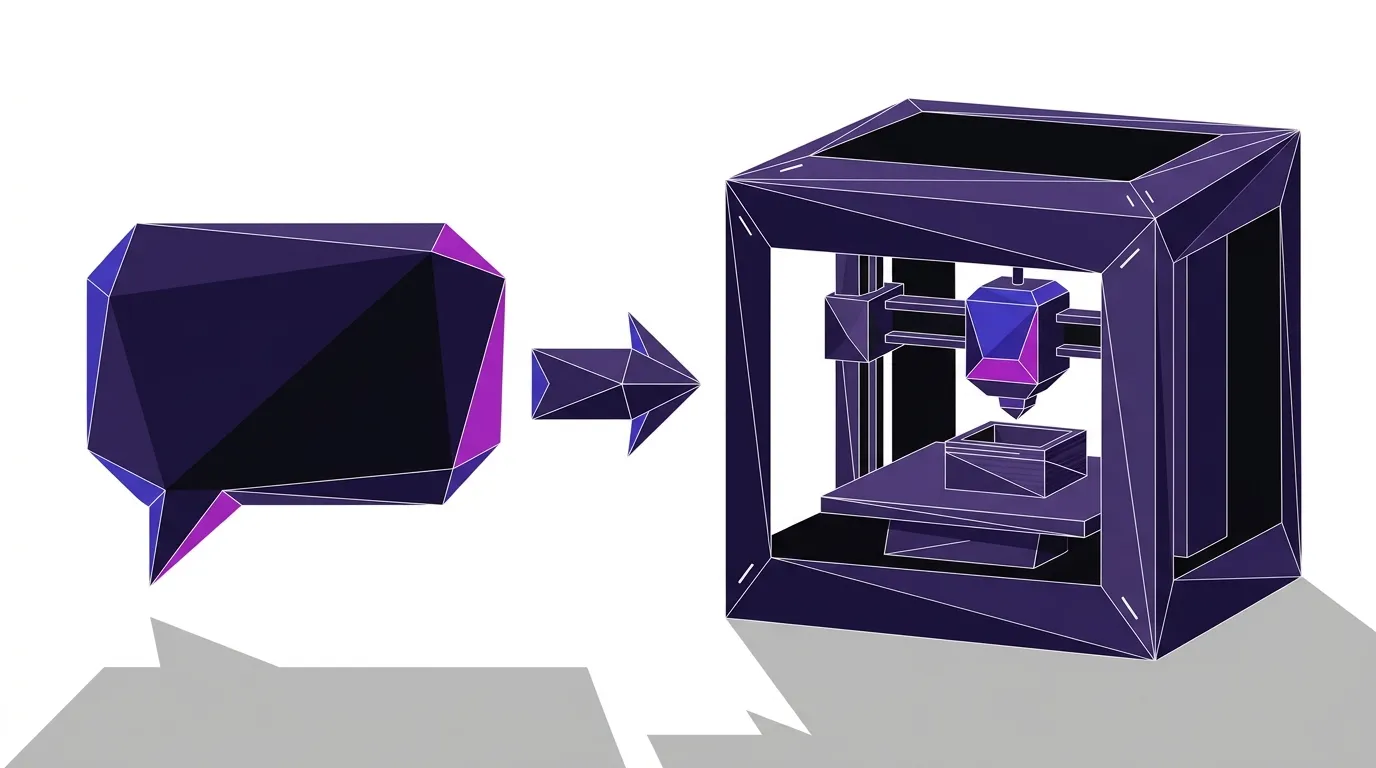
The bottleneck in physical prototyping has never really been the printer. It’s been the geometry — the hours of CAD work that stand between a product idea and a file you can actually send to a machine. For most marketing teams and product managers, that gap meant waiting on an engineer, paying a freelancer, or abandoning the idea entirely.
That gap is closing. Not because printers got faster, but because the software layer between human intent and printable geometry is getting dramatically thinner.

The old gatekeeping problem was real
CAD software has always been powerful and hostile in equal measure. Tools like Autodesk Fusion 360 can produce production-ready geometry, but the learning curve is steep enough that most non-engineers never get there. The result: physical iteration was gated behind a specialist skill that had nothing to do with whether your product idea was good.
This created a predictable drag on product development. A marketing lead with a clear concept for a branded display fixture or a revised packaging prototype would have to translate that idea into a brief, hand it to someone who spoke CAD, wait, review, revise, and wait again. The physical prototype arrived late in the process, when changing course was expensive.
LLMs are now operating CAD software directly
What’s new isn’t just AI generating 3D models — it’s AI operating professional CAD tools as an agent. As Hackaday reports, maker and writer Lee Hutchinson connected Claude to Autodesk Fusion 360’s new MCP (Model Context Protocol) server and used it to design a clock case — without being a mechanical engineer and without tolerating Fusion’s UX. A local Qwen model handled most of the geometry on the first pass; Claude cleaned up the rest.
The comments on that post are telling. Multiple practitioners describe using LLMs to write OpenSCAD scripts from dimensioned sketches on paper, getting from drawing to printable part in minutes. One commenter describes being able to say “smooth that edge so I can print without supports” and having it work. Another uses ChatGPT to generate KiCAD component models, noting that for repetitive geometry like pin headers, AI is simply faster.
This is a meaningful shift. It’s not AI replacing CAD — it’s AI making CAD accessible to people who would never have learned it otherwise. The geometry still has to be right before anything gets printed, but the path to getting there no longer requires a dedicated specialist.
Purpose-built AI model generators are scaling fast
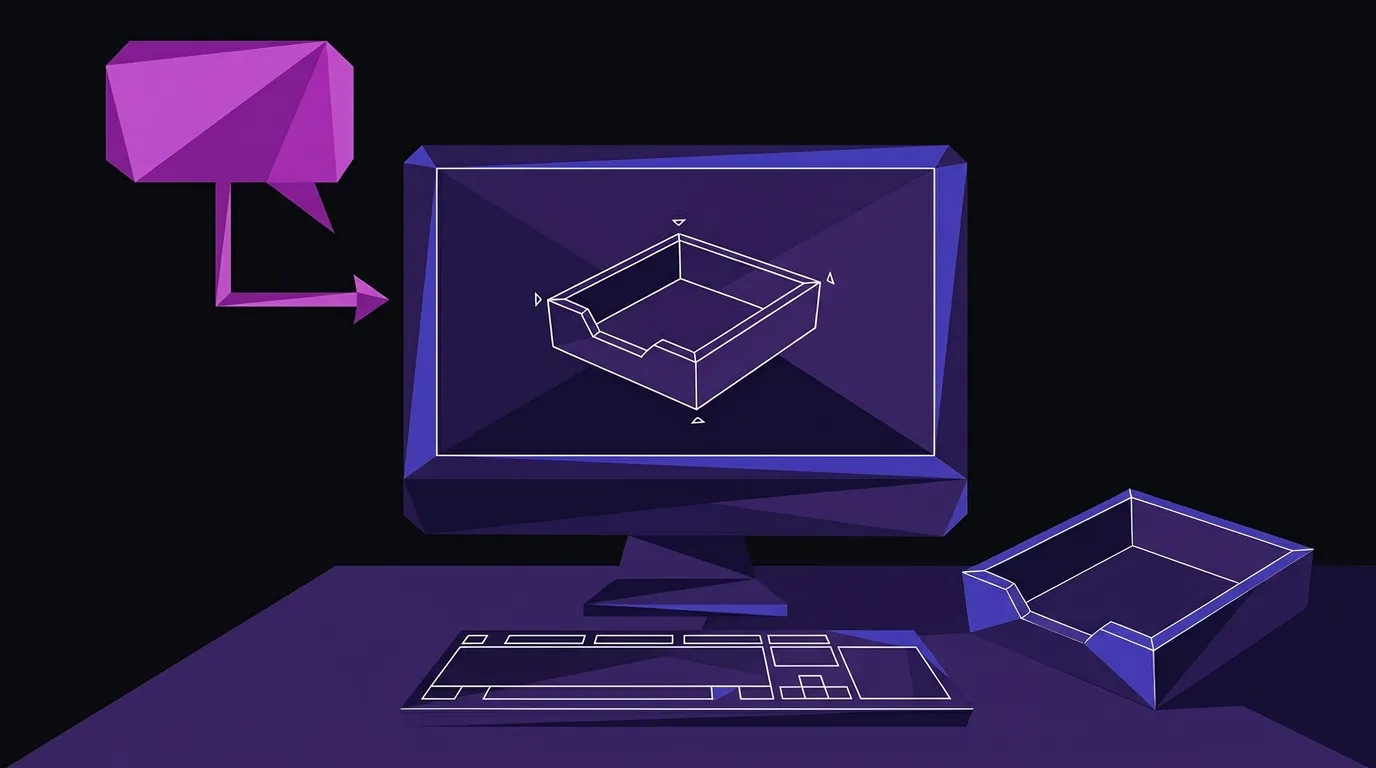
Alongside the LLM-plus-CAD approach, a separate category of tools is maturing: dedicated AI 3D model generators that take images or text prompts and output printable geometry directly. As 3D Natives covers, Meshy recently closed a $400 million Series B — a funding round that signals serious commercial conviction in this space, not just research enthusiasm.
These tools are built for a different user than the Fusion 360 crowd. They’re aimed at product designers, brand teams, and creators who need geometry quickly and are willing to accept some manual cleanup in exchange for not starting from scratch. The output isn’t always print-ready without review, but it compresses the earliest, most frustrating phase of prototyping — getting from nothing to something — dramatically.
What this actually means for brand and product teams
The practical implication here isn’t that AI produces perfect parts. It doesn’t, yet. The implication is that the first iteration of a physical concept no longer requires a specialist to initiate.
A product manager who can describe geometry in plain language — “a rectangular tray with a lip around the edge and a slot in the center for a card” — can now get a workable starting model without writing a CAD brief. A marketing team exploring branded physical objects, trade show fixtures, or custom packaging inserts can generate rough geometry for review before anyone has touched a modeling tool.
That changes where the specialist time goes. Instead of starting from zero, an engineer or experienced designer reviews and refines AI-generated geometry. Instead of waiting for a first draft, the team iterates on something physical. The bottleneck moves later in the process, which is where you want it.
For teams working with a fabrication partner — whether in-house or external — this means arriving at the conversation with a file, not just a concept. That’s a better use of everyone’s time. Our own 3D printing and prototyping work starts from wherever the client is in that process, but arriving with even a rough AI-generated model shortens the review cycle considerably.
The honest caveats
AI-generated geometry has failure modes that matter for physical output specifically. Models can be non-manifold (meaning they have holes or inconsistencies in the mesh that a slicer will reject), have wall thicknesses that won’t survive FDM printing, or produce overhangs that need support structures the AI didn’t account for. Text-to-3D tools in particular tend to optimize for visual plausibility rather than printability.
None of this is disqualifying. It means AI-generated files need a review pass before printing — checking wall thickness, verifying the mesh is solid, considering orientation and supports. That review is fast for someone who knows what to look for. The point is that review is now the work, not the geometry creation itself.
The tools will improve. Meshy’s funding suggests the commercial pressure to close the gap between “looks right” and “prints right” is very real. LLM agents operating CAD tools directly have the advantage of working inside software that already understands physical constraints — Fusion 360 knows what a valid solid is. The two approaches will likely converge.
The practical takeaway
If your team has physical product ideas sitting in a document because getting to a prototype felt too slow or too expensive, the calculus has changed. Text-to-3D tools and LLM-assisted CAD don’t eliminate the need for fabrication expertise, but they do remove the specialist gating on the first draft. Start with a description, generate geometry, get it reviewed, print it. The loop is shorter than it was a year ago, and it’s getting shorter.
The question isn’t whether your team should be using these tools. It’s whether you’re set up to turn the geometry they produce into something you can actually hold.
Ready to Print Your Next Prototype?
We run FDM fabrication alongside design and branding work — bring us your concept at whatever stage it's in. We'll help get it to a physical part.