How 3D Printing Makes Customization Affordable
Tooling costs made custom product variants impractical for most brands. 3D printing is changing that math — here's what it means for your product line.
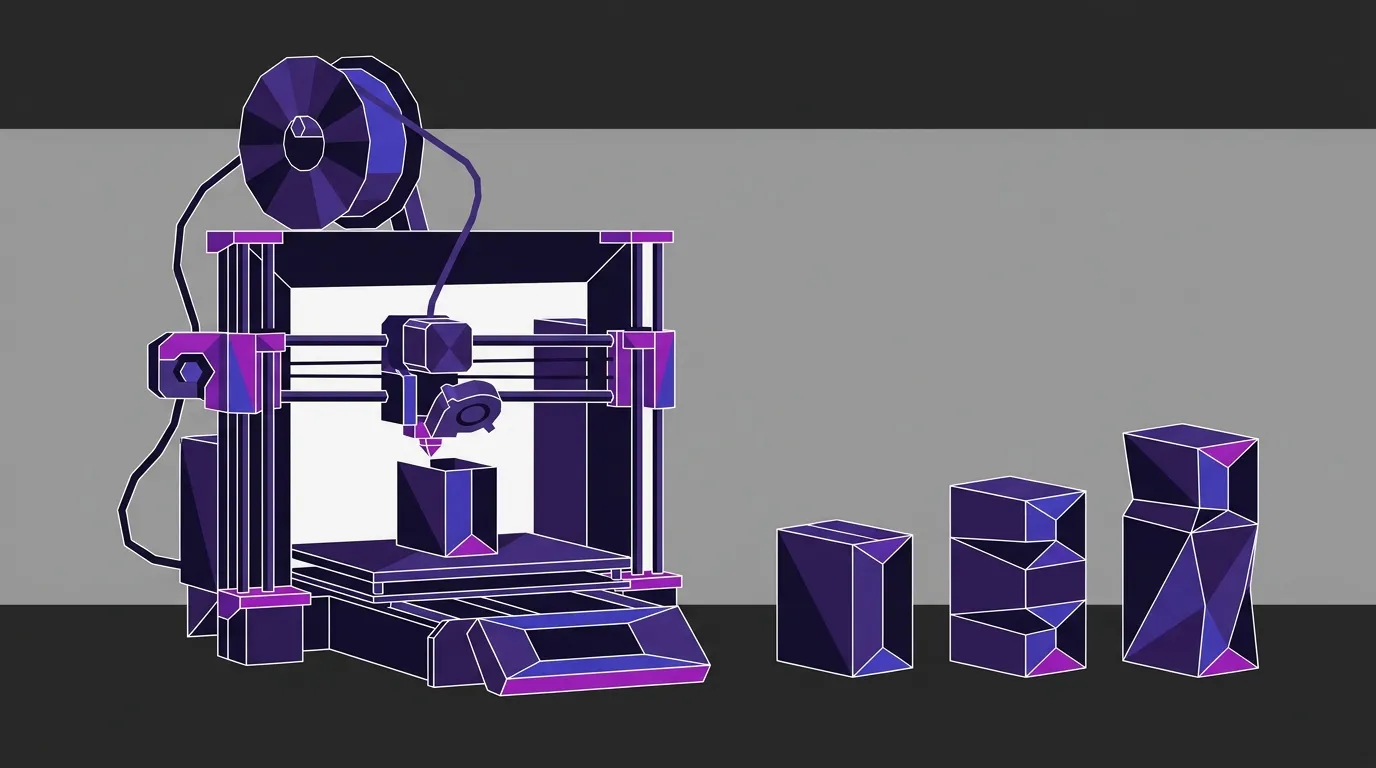
Customization used to be a luxury tax. You wanted a product in three sizes, two materials, and a version with your logo on it? Fine — pay for three separate molds, absorb the minimum order quantities, and hope your forecast was right. Most small and mid-size brands couldn’t afford to play that game, so they didn’t. They picked one SKU and lived with it.
That math is changing, and the evidence is coming from two industries where the stakes are high and the cost pressure is real: medical devices and pharmaceuticals. What’s happening in those sectors isn’t niche news — it’s a preview of where consumer product economics are heading.
What Catheters Have to Do With Your Product Line
TE Connectivity — a major connector and medical device manufacturer — recently unveiled a 3D printing process for catheter shafts at their PROPELUS Prototype Center in Galway, Ireland. Catheters need polymer jackets with different thicknesses, lengths, and materials at different points along the shaft. Traditionally, that variation is expensive and slow to produce.
TE’s process prints directly onto the catheter as it rotates, using less material and completing production faster — while keeping the same part properties. As 3DPrint.com reports, Medical Engineering Fellow Bernard McDermott noted the process has the potential to “significantly reduce product costs, simplify supply chains and have a positive environmental impact.”
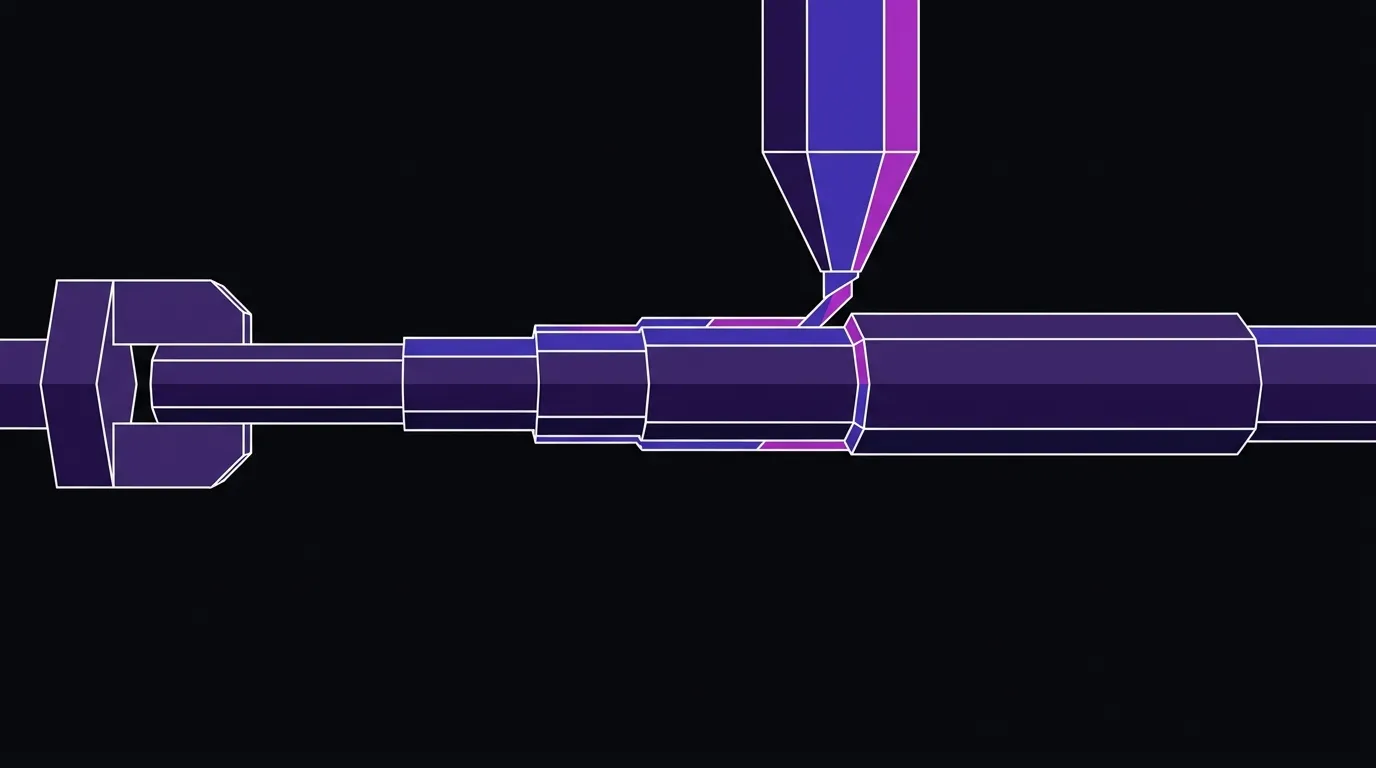
Here’s why this matters outside the medical aisle: catheters are one of the most demanding customization problems in manufacturing. They’re cost-sensitive, highly regulated, and need to vary by patient anatomy, device class, and clinical use case. Class I short-term urinary catheters, Class II longer-term devices, and Class III cardiac catheters are all distinct products with distinct requirements — yet they now share a manufacturing platform. Additive manufacturing handles that variation without retooling. The process is specifically described as more flexible, enabling more iterations with greater design freedom — which is another way of saying the setup cost that normally scales with variation has been removed from the equation.
The underlying principle is the same whether you’re making catheter shafts or custom packaging inserts: no tooling means no minimum.
The Two Industries Converging on the Same Answer
Medical devices aren’t the only regulated, cost-sensitive industry where this pattern is showing up. 3D Natives reports on PharmaTher’s work with 3D-printed personalized peptides — pharmaceutical compounds produced in individualized doses rather than standardized batches. The digital, tooling-free nature of the process is what makes per-unit personalization viable at all; there’s no mold to amortize across a run, so the production logic doesn’t punish small quantities.
Both processes eliminate the amortized tooling cost that makes small-batch variation expensive — TE’s rotating-print catheter shaft and PharmaTher’s per-dose peptide production both skip the mold entirely. That shared mechanism is what makes the parallel tight, not just analogous. Two heavily regulated industries, where cost control is existential and where variation has historically been prohibitive, are converging on the same conclusion: additive manufacturing makes per-unit customization economically rational.
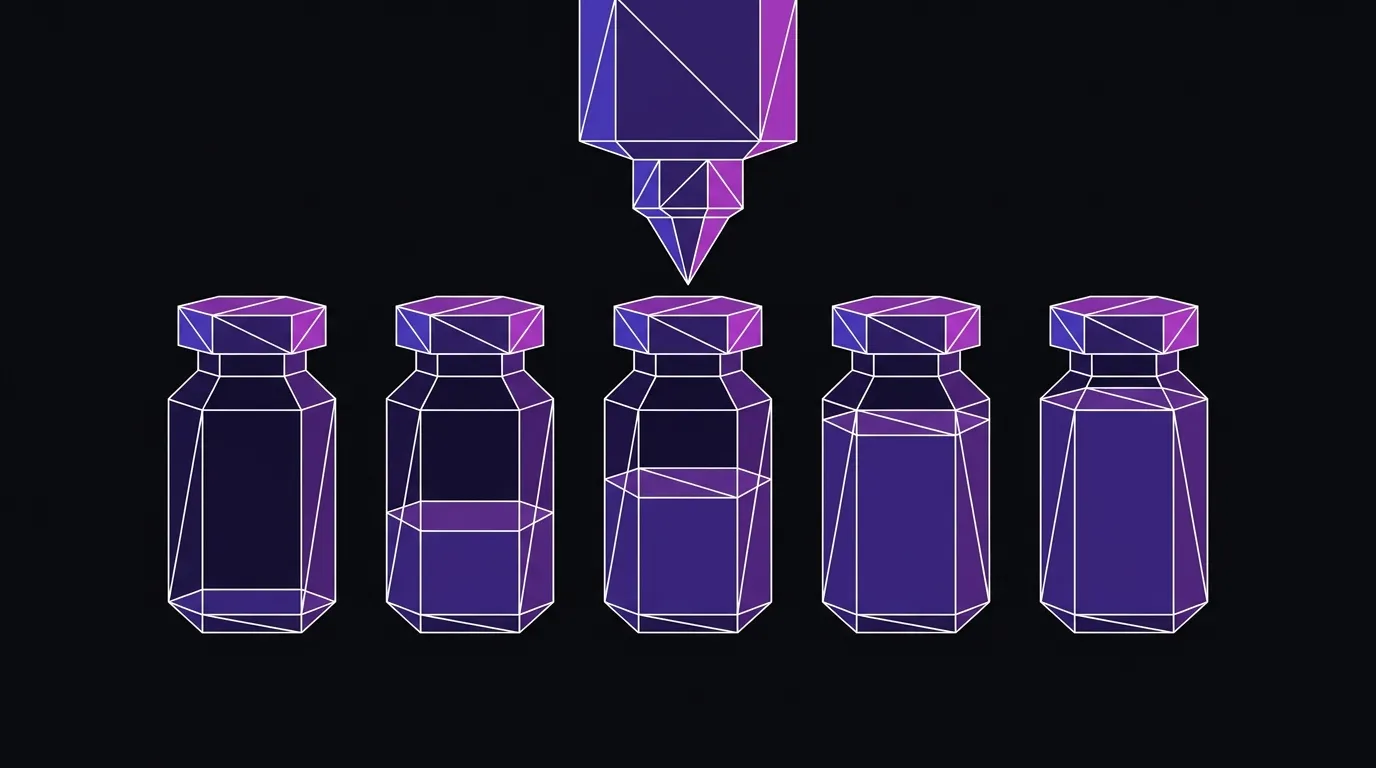
And here’s the part that should get a consumer brand’s attention: if the economics work when you add regulatory submission costs and biocompatibility testing to every unit, they work even more cleanly when your only variable is colorway, fit, or finish. The friction is lower. The tolerance requirements are less demanding. The path from design file to finished object is shorter. The regulated-industry case isn’t just analogous to consumer goods — it’s the harder version of the same problem, and it’s already being solved.
The old question was whether you could afford to offer a custom variant. The more pressing question now is whether a competitor offering a fit-specific size run or a partner-colorway variant will pull customers away before you’ve had a chance to test the model yourself.
FDM Works for Variants, Prototypes, and Small Batches — Not for Everything
It’s worth being precise here, because “3D printing” covers a wide range of processes with very different capabilities and costs.
FDM (fused deposition modeling) — the technology behind desktop and professional-grade printers — is the most accessible entry point for brands exploring customization. It handles a wide range of thermoplastic materials, it’s fast for small batches, and the per-unit cost structure doesn’t scale the way injection molding does when you introduce variation. FDM unit costs will exceed injection molding once you’re past a certain production volume — but that’s not the use case we’re describing. The use case is the variant run you can’t justify tooling for, the prototype that needs to be in hand before you commit, the short batch that tests whether demand is real. For those applications, FDM is the right tool.
Concretely: branded packaging inserts, custom jigs and fixtures, fit-variant housings in ABS or PETG, promotional physical objects, and product prototypes that need to be handled and tested — these are the product types that fit well. Our 3D printing and prototyping work is built for exactly this kind of early-stage evaluation.
FDM is not the right tool for high-detail consumer goods with fine surface requirements, food-contact applications, or parts requiring medical-grade biocompatibility. That’s not a reason to stop the conversation — it’s a decision fork. If your product falls into one of those categories, the right next step is figuring out which additive process fits, not whether additive manufacturing applies at all.
Brands Without a Custom Variant Are the Most Exposed
The brands that will benefit most from this shift aren’t the ones that overhaul their entire product line at once. They’re the ones that identify one specific place where customization would matter to their customer — and test it.

That might be a custom-fit product variant. It might be a branded physical object that ships with a purchase. It might be a limited run of a modified SKU for a specific retail partner or event. The test doesn’t need to be expensive. That’s the point.
TE Connectivity’s catheter work is instructive here too. Their process emerged from a dedicated prototype center — a contained environment for developing manufacturing innovations before they go to production. They didn’t redesign their entire catheter manufacturing line on day one. They built a process, proved it out, and now they’re describing what it could mean at scale. PharmaTher is doing the same thing with personalized peptides: validating per-unit economics at small scale before committing to broader production.
You don’t need a prototype center. You need one object and a customer willing to tell you if it fits.
That’s the same sequence that makes sense for any brand exploring customization: prototype the variant, validate the demand, then decide whether to scale. Brands that wait will find that once competitors normalize short-run customization, the customer who could have been locked in by a fit-specific variant is simply harder to win back — not because you can’t match the product, but because the competitor got there first and the relationship formed around it.
The tooling-cost argument against offering variants was rational for a long time. It’s a weaker argument every year — and the brands treating it as settled are the ones taking the most risk.
Ready to Prototype a Custom Variant?
We run FDM fabrication for brands exploring short-run customization — from first prototype to small-batch production. Let's figure out if your product is a fit.