Prototyping at Scale: How FDM 3D Printing Reduces Tooling Risk Before You Commit
FDM 3D printing lets product businesses test designs in weeks instead of months. Here's what that means for your development cycle.
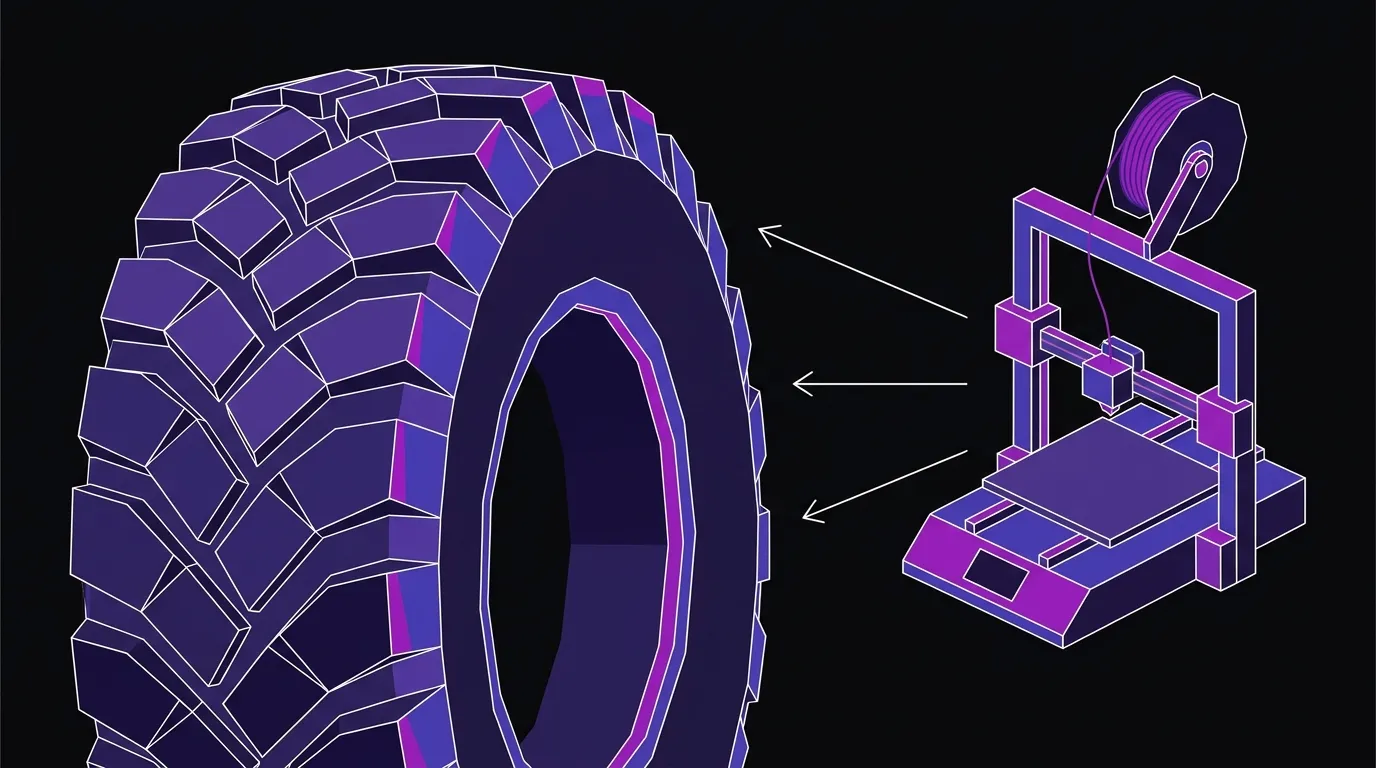
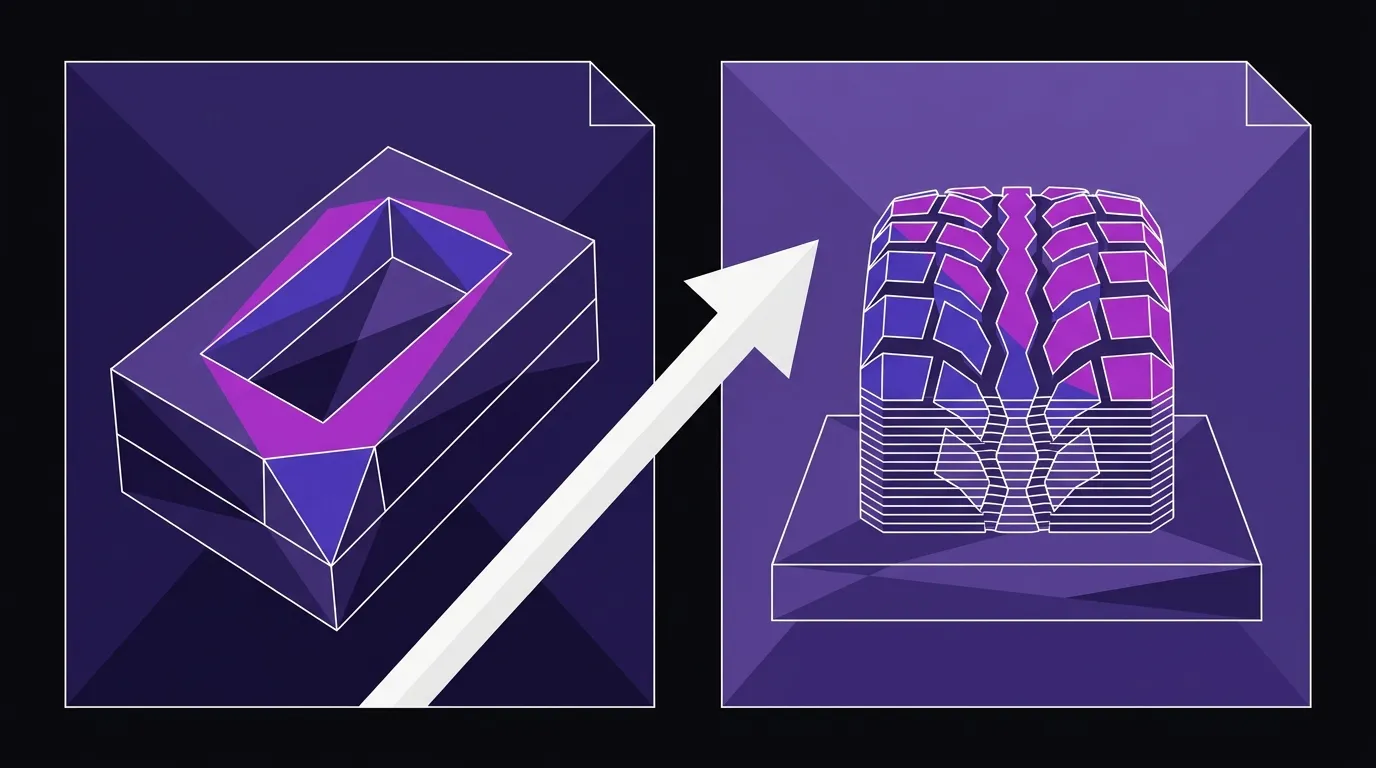
A mold or die is a commitment — often tens of thousands of dollars and months of lead time — made before you’ve put a real part in a real user’s hands. According to 3D Printing Industry, off-the-road tire development has historically required that full tooling investment before a customer could evaluate a design at full scale: limited iteration, high stakes on every decision, and long waits between concept and confirmation. That’s the problem 3D printing solves — not by eliminating the tooling commitment, but by pushing it to a smarter moment in the process.
Two recent examples from very different product categories show exactly how this works in practice — and together they point toward a principle that applies to almost any physical product business.
Tooling Risk Is a Timeline Problem, Not Just a Cost Problem
When OTR Engineered Solutions launched OTR3DLab, the explicit goal was to break the dependency between “design review” and “tooling spend.” Off-the-road tires — the kind fitted to mining equipment, agricultural machinery, and heavy construction vehicles — had historically required a full tooling investment before a customer could evaluate a design at full scale.
OTR3DLab uses large-format additive manufacturing to print full-scale tire, wheel, and track prototypes in a few weeks instead of months. The printed parts can be mounted on standard steel or aluminum wheels with conventional tire mounting equipment, which means customers can evaluate on-vehicle fitment, proportions, and clearance on actual equipment — before a single dollar goes toward production tooling. As 3D Printing Industry reports, the service supports over 1,000 printable materials, including flexible elastomers that approximate the look and feel of a production tire.
As OTR’s president and CEO Oscar Torres put it, the speed “can be a major advantage for customers working to launch new products, refresh existing platforms, or differentiate themselves in competitive markets.”
That’s not a marketing claim — it’s a description of what changes when physical review stops being gated behind tooling.
User Data Can Drive the Design, Not Just Validate It
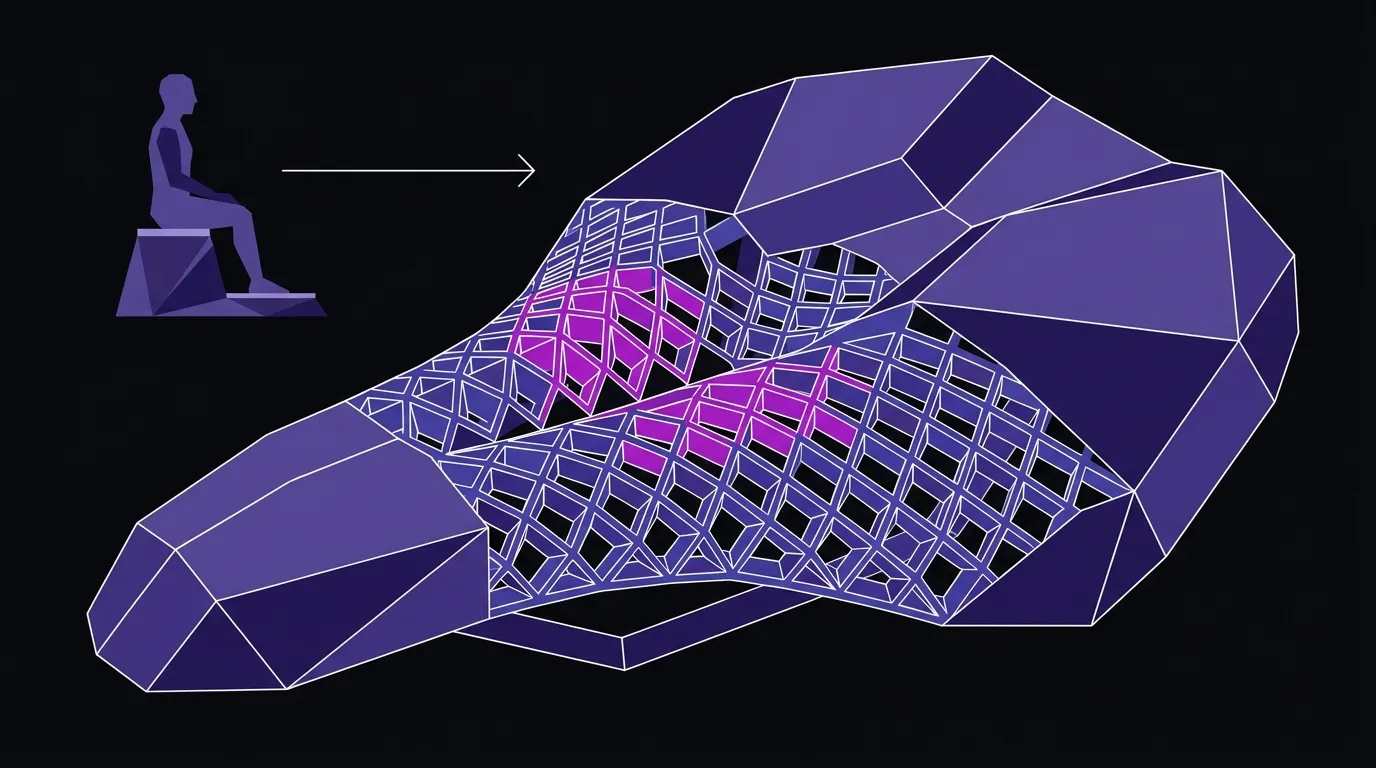
The OTR case is about compressing the timeline between concept and physical review. Selle Italia’s Unica saddle does something more ambitious: it uses 3D printing to make each product instance different by design.
The Unica saddle’s inner padding is manufactured based on individual pressure mapping data collected at authorized retail locations. The cyclist undergoes a pressure analysis using Selle Italia’s idmatch measurement system. That data drives the geometry of the saddle’s internal reticular structure — a network of interconnected cells whose density and arrangement are tuned to how that specific rider distributes weight. The outer shape stays consistent; the interior is unique to the person. As 3Dnatives reports, the finished saddle arrives roughly three weeks after the analysis.
This is not a niche professional product. Selle Italia has positioned Unica for any cyclist, regardless of skill level — which means the business model is built on mass customization at accessible scale, not bespoke craftsmanship for a small premium market.
The implication for product businesses is worth sitting with. When your manufacturing process can accept variable geometry as an input rather than treating it as a defect, user data stops being something you collect for marketing and becomes something you build into the product itself.
What These Two Cases Have in Common
OTR and Selle Italia are solving different problems in different industries at different price points. But the underlying logic is the same: 3D printing moves a physical part earlier in the decision chain.
For OTR, earlier means before tooling. For Selle Italia, earlier means before manufacturing — the design is finalized at the point of sale, not at the factory.
Both approaches reduce a specific category of risk: the risk of committing resources to a design that hasn’t been tested against real-world conditions. In OTR’s case, the test is visual and fitment-based. In Selle Italia’s case, the test is biomechanical and user-specific. The technology is the same class of solution applied to different validation problems.
The real competitive moat here isn’t the printer — it’s the institutional habit of treating physical feedback as a design input rather than a sign-off ritual. Companies that build that habit into their development process stop asking “is this design good enough to tool?” and start asking “what did the prototype tell us?” That’s a different question, and it produces better answers.
How to Apply This to Your Product Development Process
The pattern across both cases points to a practical framework for any product business considering 3D printing in its development cycle.
Identify your highest-cost validation gate. Where in your process do you spend the most money or time before you get a physical part in front of a real user or a real vehicle? That gate is the right place to insert a printed prototype. For most businesses, it’s somewhere between concept approval and tooling sign-off — exactly where OTR3DLab targets its service.
Match the prototype to the decision it needs to support. A fitment check needs dimensional accuracy and the right scale. A user comfort test needs the right material feel. A board-level design review needs visual realism. FDM materials have expanded significantly — flexible filaments, high-temperature composites, rubber-like elastomers — which means the prototype can be matched to the decision rather than forcing the decision to accommodate the prototype’s limitations.
Treat iteration as the point, not the exception. The default assumption in tooling-gated development is that iteration is expensive, so you minimize it. When a prototype costs weeks and a fraction of tooling spend, iteration becomes the strategy. You can run two or three design directions in parallel and test them against each other before picking one to commit.
Build user data into the design loop. The Selle Italia model is the clearest example of what this looks like at full development: pressure data collected from the actual user drives the geometry of the manufactured part. Even a simplified version of that loop — collecting structured feedback from users before finalizing a geometry, then revising the printed prototype accordingly — changes what iteration means. You’re not guessing at what a user needs; you’re encoding what you measured. The earlier that happens in the process, the less it costs to act on what you learn.
For product businesses that want to bring some of this capability in-house or need a fabrication partner for early-stage work, our 3D printing and prototyping services are built around exactly this stage of the process — physical parts for design review and iteration, before the tooling decision gets made.
The Competitive Argument
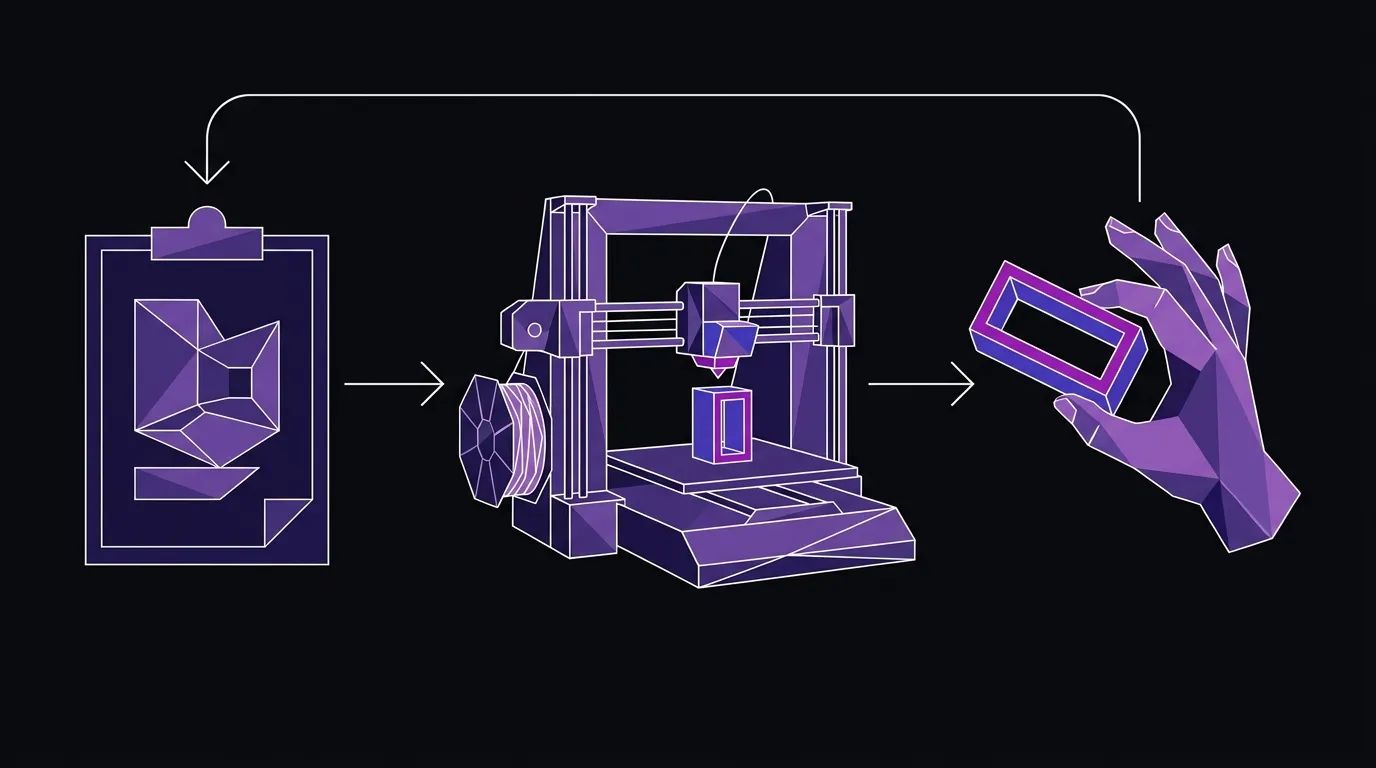
Faster iteration isn’t just an operational efficiency. In product categories where design cycles are measured in months and tooling mistakes are measured in six figures, the team that can run three validated concepts in the time a competitor runs one has a structural advantage.
That advantage compounds. Each iteration cycle generates real feedback — from users, from engineers, from sales teams who’ve seen the physical object — that improves the next design. Over time, the product development process gets smarter because the feedback loops are shorter and grounded in physical reality rather than renders and specifications.
The businesses that figure this out early don’t just ship better products. They ship them faster, with more confidence, and with less money tied up in decisions that turn out to be wrong. That’s the actual case for 3D printing in product development — not the technology itself, but what it does to the economics of being right sooner.
Ready to prototype before you commit?
We produce FDM prototypes for design review and iteration — physical parts that help you make the tooling decision with confidence, not guesswork.