Beyond the Button: Designing for AI-Driven, Intent-Based Interfaces
Menus and buttons are giving way to intent-driven AI interfaces. Here's what that shift means for your brand's web presence and how designers must adapt.
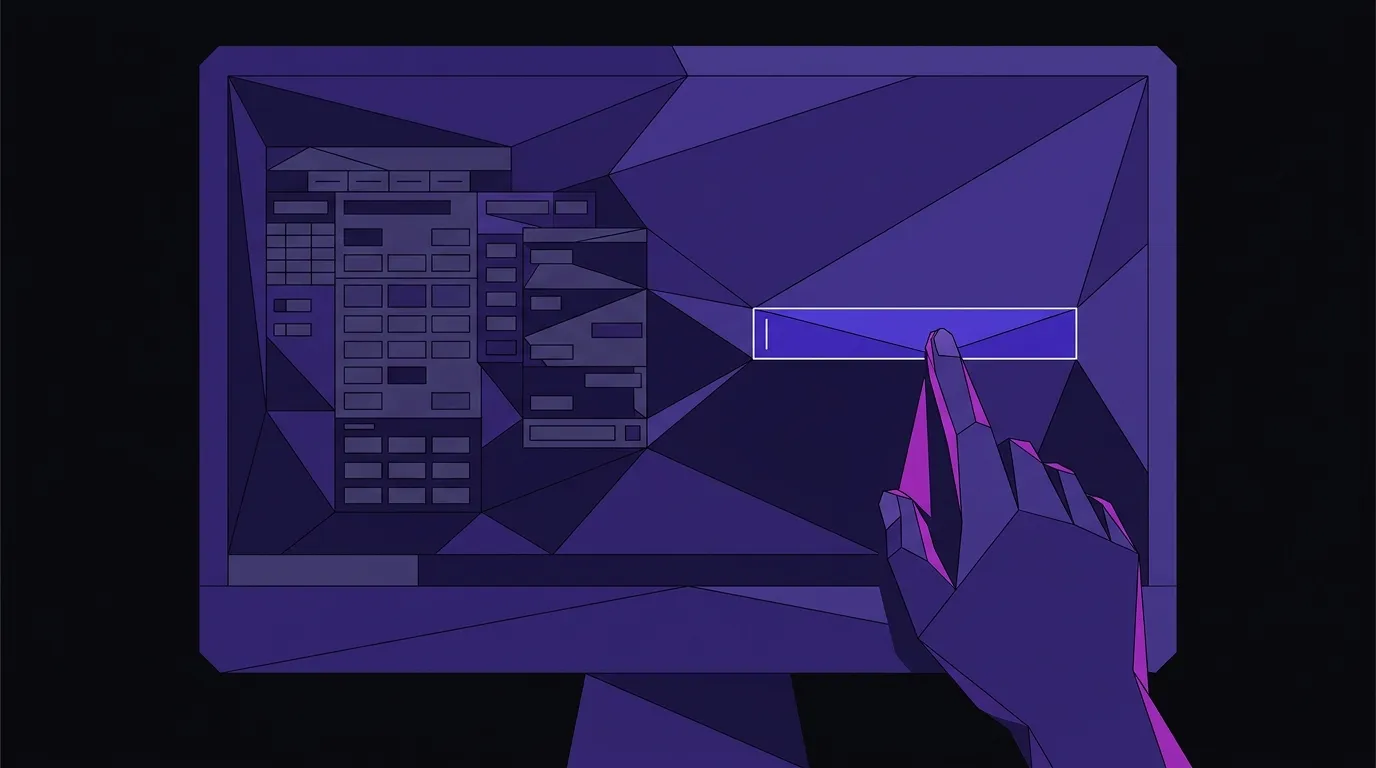
There is a contract buried inside every website ever built: the site holds the data, and you do the work. You click the dropdown, filter the results, fill the form, dodge the upsell, and open a second tab to double-check what you just found. Decades of this have trained us to mistake the friction for the product.
That contract is breaking. Not gradually — it’s breaking fast, and the businesses that understand it earliest will have a meaningful head start on the ones still optimizing button colors.
The “10-click” process was never a feature
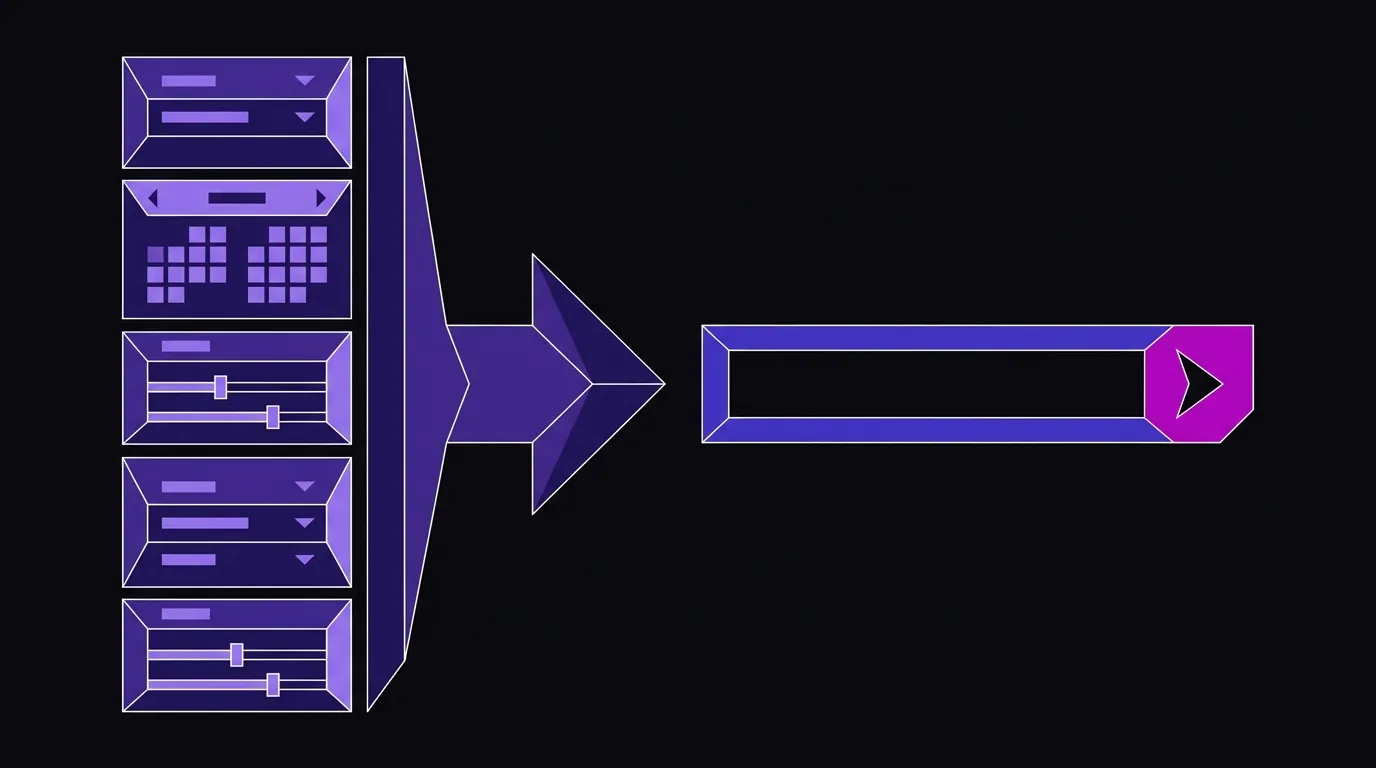
Smashing Magazine’s Carrie Webster maps the problem precisely with a flight-booking example. To buy a plane ticket today, a user navigates to an aggregator, selects trip type from a dropdown, waits on two autocomplete fields, clicks through a calendar modal, filters by price and layover, sorts dozens of results, and survives a three-page checkout gauntlet full of rental car upsells. Ten discrete interactions — minimum — to accomplish one goal a person could state in a single sentence.
Webster frames this as intent-driven design: instead of asking users to operate the machinery of your site, you ask what they’re trying to accomplish and execute the steps invisibly. The user says “non-stop to Chicago next weekend under $300, arrives before 5 PM.” The system does the ten clicks. The user gets one actionable answer.
This isn’t a distant concept. Tools like Perplexity AI already demonstrate it at scale — as Webster notes, instead of returning ten blue links and leaving synthesis to the user, Perplexity reads the intent behind a complex question and assembles a direct answer. The open-tabs workflow is the thing being replaced, not just the search box.
The interface doesn’t disappear — it goes backstage
Here’s where the conversation gets more nuanced, and where a single source won’t give you the full picture.
The UX Collective’s Fabricio Teixeira surfaces a tension that the “no interface” framing can gloss over. He quotes a sharp observation about AI coding agents: “You no longer have to operate the software step by step, but a familiar design problem comes back in another form: What did the system understand? What is it doing? What has it changed? What can I stop? What should I review?”
That’s the real design challenge. Eliminating visible controls doesn’t eliminate the need for user agency — it relocates it. When the interface can act autonomously on a user’s behalf, the designer’s job isn’t to remove friction everywhere. It’s to remove friction from the goal while preserving control over the execution. Users need to trust what the system is doing. That trust has to be designed.
This is a fundamentally different skill set than arranging menus. It’s closer to writing a clear brief than drawing a wireframe.
What this means for brand websites specifically
Most business websites aren’t booking engines or AI search tools. But the same shift in user expectation is arriving on every homepage, service page, and contact form. Users increasingly arrive with a formed intent — “I need a packaging redesign for a product launch in Q4” — and they’re losing patience with sites that make them hunt through navigation trees to figure out whether you even do that.
The practical translation for brand owners:
Conversational entry points beat mega-menus. An AI chat widget or a smart intake form that asks “what are you trying to accomplish?” will route a visitor faster and more accurately than a seven-item nav. The information architecture still matters — it just moves behind the curtain.
Content structure has to serve machines as well as humans. Intent-based AI systems — including Google’s AI Overviews — pull answers from structured, clearly written content. A wall of brand-voice prose is harder to synthesize than a page that leads with a direct answer and supports it with specifics. This isn’t writing for robots; it’s writing clearly enough that both a robot and a busy human can extract the point in five seconds.
The prompt is the product. Sophia Hee, writing in the UX Collective, frames it this way: what you ask the system shapes what you get. The same principle applies to how a brand site frames its offerings. The “prompt” a visitor constructs in their head when they land on your site — “can these people solve my problem?” — is answered by your copy, your structure, and your visual hierarchy before they click anything. Design that prompt well, and the rest of the interaction follows naturally.

The designer’s role is shifting, not shrinking
There’s an anxious read of all this — that intent-driven AI makes interface designers redundant. We’d push back on that hard. What’s actually happening is that the surface area of design is expanding.
Webster makes the case directly that UX designers need to re-evaluate their role, shifting focus from visible interfaces to guiding transparent, intent-driven AI experiences. The craft moves upstream: into how a system understands a goal, how it communicates what it’s doing, how it fails gracefully when intent is ambiguous, and how it keeps the human in control without making them operate every step manually.
That’s more design work, not less. It’s just less of it happening in a Figma file and more of it happening in content strategy, system logic, and the quality of the language a product uses to confirm, clarify, and correct.
For businesses commissioning web work — this is the moment to ask harder questions of whoever builds your site. Not “how many pages?” but “how does the site respond when a visitor doesn’t know exactly what they want?” A well-built web presence today should be able to handle that gracefully, whether through smart copy architecture, a conversational intake layer, or both.
The button isn’t dead — but it’s no longer the point
Buttons will be around for a long time. So will forms, menus, and navigation. But the design philosophy that treats those elements as the goal — rather than the scaffolding that gets a user to their goal — is what’s actually ending.
The shift is from “how do we get users to click the right things?” to “how do we understand what users are trying to do and remove everything standing between them and that outcome?” That’s a harder question. It demands more from designers, more from developers, and more from the businesses that brief them.
The businesses that treat it as an opportunity rather than a disruption will end up with sites that work harder, convert better, and age more gracefully as AI capabilities continue to change what users expect from every digital interaction they have.
Build a site that works smarter
We design and build hand-coded web experiences structured for the way users actually arrive — with a goal in mind, not a sitemap. Let's talk about what your site should do.