
Most businesses start with a logo and call it branding. The ones that get it right start somewhere else entirely — here’s where to begin.
The first thing most business owners do when they decide to get serious about their brand is hire someone to design a logo. It makes sense — a logo is tangible. You can see it. Put it on things. Share it on social media. It feels like progress.
But as Thom Baker puts it, brand strategy is not a design exercise. It’s a thinking exercise. And until the thinking is right, design can only do so much. A logo built on unclear strategy might look great. But six months later, the underlying problems — inconsistency, lack of recognition, marketing that doesn’t land — are still there with a fresher coat of paint.
The businesses that build brands worth remembering don’t start with the logo. They start with the questions the logo is supposed to answer. Here’s what that actually looks like — and what to do before you ever open a design brief.
Why So Many Businesses Fall Into the Logo-First Brand Strategy Trap
The logo-first instinct is understandable. When you’re launching or rebranding, a logo is the most visible, shareable output. It goes on the website, the business card, the van wrap. It signals to the world that your business exists and means business.
But visibility isn’t strategy. Metro Nova Creative make the distinction clearly: your logo is a recall mechanism — a visual reminder of an experience. By itself, before it’s been attached to any meaningful experience, it’s just art. Without a brand strategy in place, your logo doesn’t mean anything yet.
The problem compounds when the logo is beautiful. A good-looking mark creates the illusion of a complete brand. The business moves forward without ever doing the strategic groundwork, and the inconsistencies that follow — unclear messaging, misaligned visual choices, marketing that doesn’t connect — get attributed to execution problems when they’re actually strategy problems. Design without strategy is just decoration.
“Designing a logo without brand strategy is like choosing a suit before knowing the occasion. You might look good. But you might also be completely wrong.”
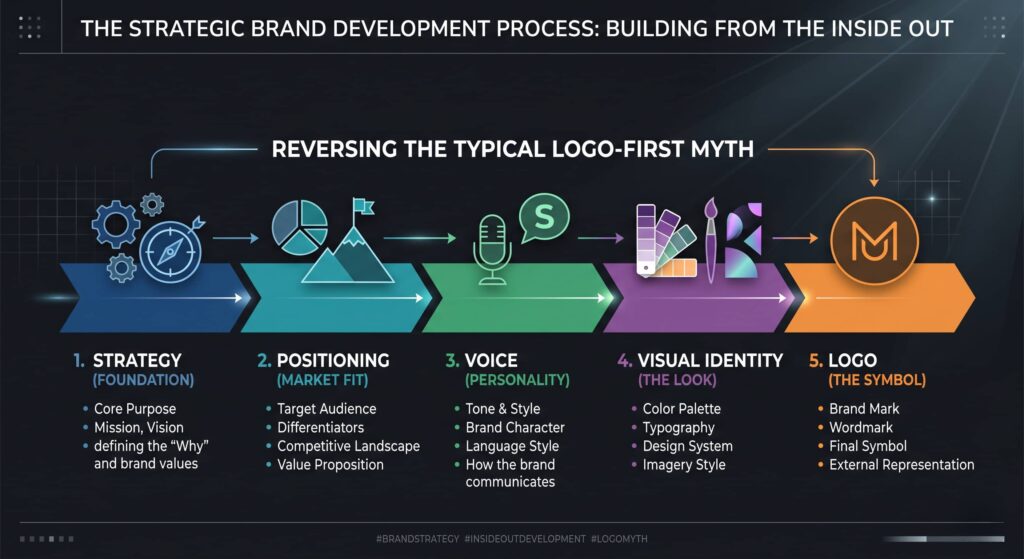
The Correct Brand Strategy Order: What Comes Before Logo Design
Road9 Media frame it well: a logo is the visual culmination of your brand strategy, not the beginning. Think of your brand strategy as the blueprint and your logo as one of the visible features of the finished structure. Without the blueprint, you’re building without a plan.
Here is the order that produces a brand with actual staying power:
Step 01 Understand Your Brand Strategy Audience
Before any visual decision is made, you need to know exactly who you’re designing for. Not in a broad demographic sense — but in a specific, behavioral sense. What does your ideal customer care about? What problems are they trying to solve? What do they already trust and why? Your audience’s psychology shapes every design decision that follows, from color choices to typographic tone to the words you use.
- Who is your primary customer, specifically — not just “small business owners” but which ones, with which problems, at which stage?
- What do they care about that your competitors aren’t addressing well?
- What does “trusting a business like yours” look and feel like to them?
Step 02 Define Your Brand Strategy Positioning
Positioning is the answer to one question: why should someone choose you over everyone else? It’s not a tagline. It’s the honest, specific answer to what makes your business different — and it has to be true, defensible, and meaningful to the people you’re trying to reach. A logo can’t communicate differentiation by itself. But a logo built on clear positioning can reinforce it every time someone sees it.
- What do you do that your closest competitors don’t, can’t, or won’t?
- Is your differentiation based on expertise, approach, price, speed, personality, or something else?
- How do you want to be positioned in the mind of your customer — and does your current brand reflect that?
Step 03 Articulate Your Brand Strategy Values and Story
Your brand values are the principles that guide how your business behaves — how you make decisions, treat clients, handle problems, and show up consistently over time. Your brand story is the human context around why those values exist. Neither of these is decoration. They’re the foundation that makes your visual identity feel authentic rather than arbitrary.
- Why does your business exist beyond making money?
- What do you believe about your industry or your craft that most of your peers don’t act on?
- What story led you here, and how does that story create trust with the people you serve?
Step 04 Develop Your Brand Strategy Voice and Messaging
How your brand sounds is as important as how it looks. Your tone of voice — whether you’re warm and direct, authoritative and concise, playful and sharp — needs to be defined before it can be applied consistently. And your core messaging — how you describe what you do, who you do it for, and why it matters — should be settled before it gets embedded into a website, a business card, or a social profile.
- What three words would your best clients use to describe working with you?
- What does your business sound like at its best — in a pitch, in a proposal, in a follow-up?
- What do you say that your competitors don’t? That’s your messaging territory.

Step 05 Now Design Your Logo Brand Identity — and Everything Else
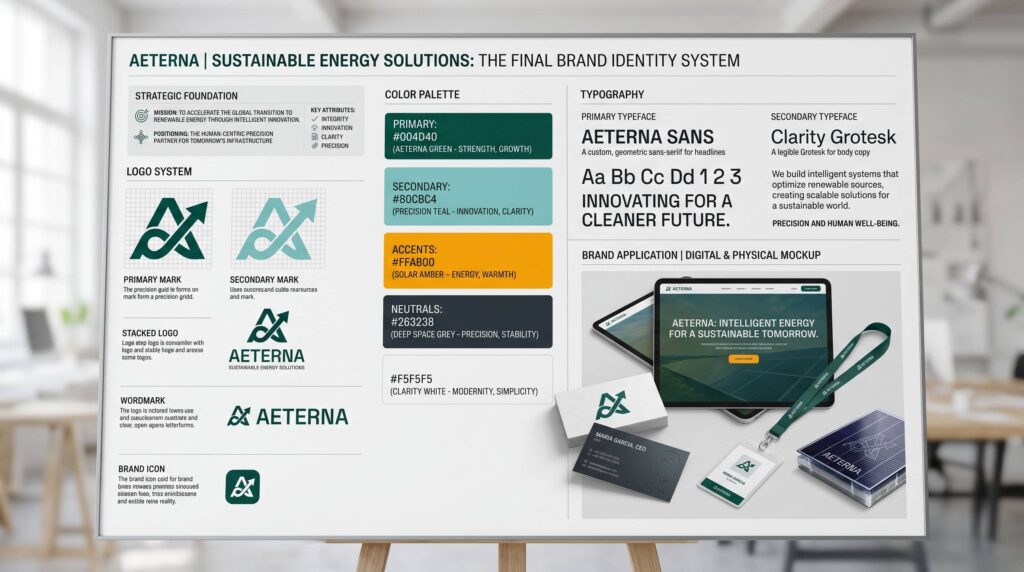
After the strategic foundation is in place, visual identity design becomes a fundamentally different exercise. Instead of making aesthetic choices based on personal preference or trend, every decision has a brief to answer to. The color palette reflects the brand’s personality and positioning. The typography signals the right emotional tone. The logo mark distills the brand’s essence into something instantly recognizable.
- Brief the designer on strategy, not just aesthetics. Share the positioning, the audience, the values, and the voice.
- Evaluate design options against the brief, not personal taste. Ask: does this communicate what we’ve defined?
- Build the full identity system — not just the logo. Colors, type, imagery direction, and usage guidelines all follow from the strategy.
Why Brand Strategy Before Logo Design Produces Better Results
The difference between a logo built on strategy and one built without it isn’t always visible in the design itself. Both might look professional. But over time, the strategic one compounds. Every touchpoint reinforces the same message. Every marketing piece feels like it came from the same brand. Customers start to recognize the business not just by its mark but by the whole experience.
The non-strategic one drifts. Each new piece of content or design gets made by feel. The website looks different from the social. The tone shifts depending on who writes the copy. The logo gets tweaked because something “feels off” — when the real problem isn’t the logo at all.
“A logo expresses a brand. It does not define it. Designing a logo without strategy is designing a cover without knowing the story.”
The logo is not where the brand is built. It’s where the brand becomes visible. Get the foundation right first, and the visual identity — including the logo — will do its job properly. As we covered in our previous post on logo vs. brand identity, a logo is one element within a much larger system. This post is about making sure that system is built on something solid before the first design file is ever opened.



Start With Strategy. Then Design.