
Logo vs. Brand Identity: Why the Difference Matters for Your Business
A lot of small business owners think a logo is a brand. It’s not. Here’s what actually makes up a brand identity and why it matters.
Here’s a scenario that plays out all the time. A small business owner invests in a logo. It looks great — clean, professional, exactly what they had in mind. They put it on their website, their business cards, their social profiles. And then, six months later, they’re frustrated. Nothing changed. People still don’t remember the business. The marketing still isn’t landing. The brand still doesn’t feel like a brand.
The problem isn’t the logo. The problem, as Constant Creates puts it, is that they confused having a logo with having a brand identity. They made an investment in the wrong thing at the wrong time, in the wrong order. And it’s one of the most common — and most correctable — mistakes a small business can make.
Let’s untangle these terms so you can invest strategically and get actual results.
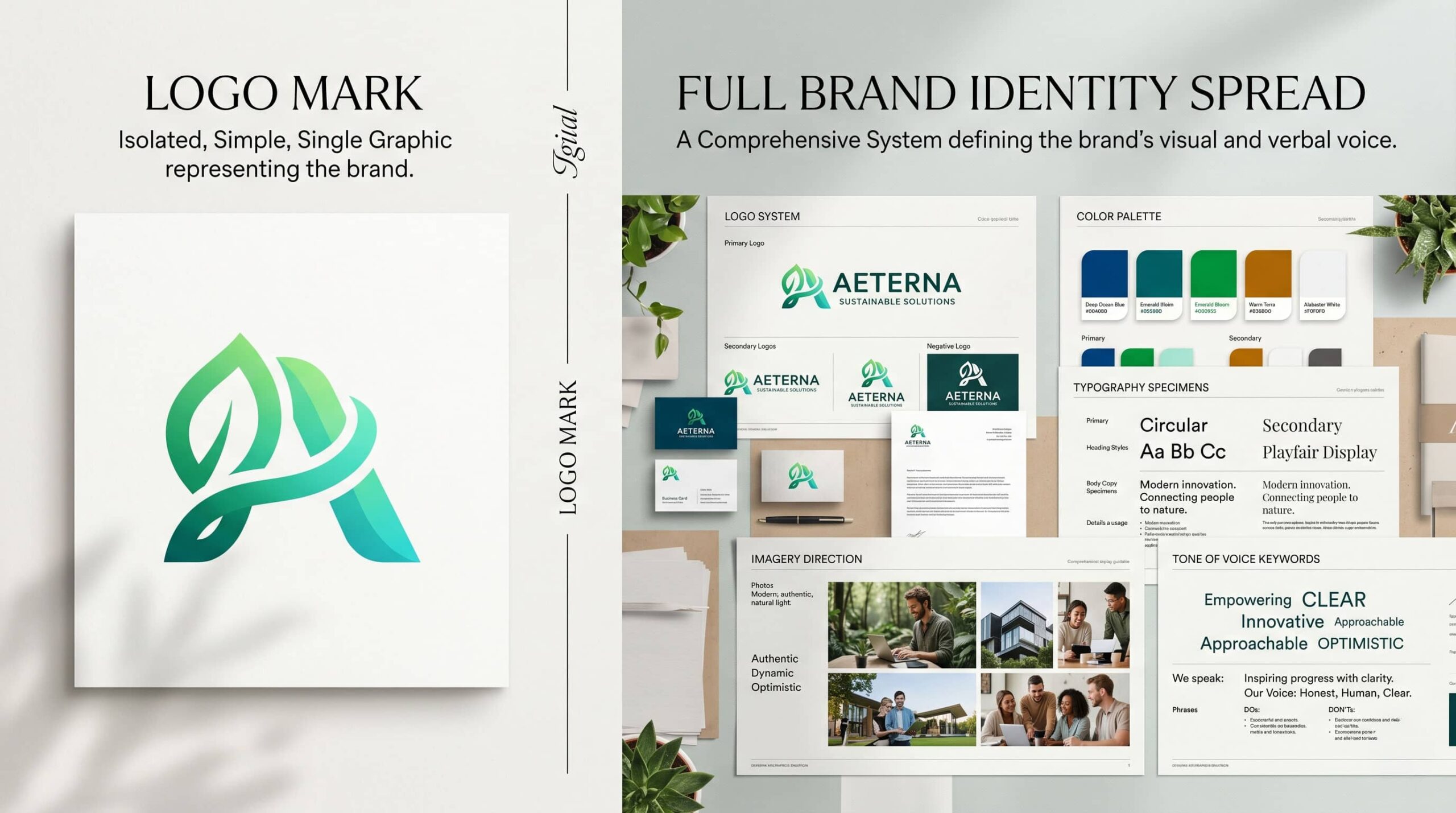
What a Logo Is in Brand Identity: One Element of a Larger System
A logo is a visual mark — a symbol, wordmark, lettermark, or combination of these — that identifies your business. Good Brand Partners describe it well: think of your logo as your business’s signature. Recognizable, memorable, and usually the first thing people see.
That’s a meaningful job. A good logo does real work. It creates a visual shorthand for your business that people can recognize at a glance — on a sign, a package, a screen, a shirt. It should be simple enough to reproduce at any size, distinctive enough to stand out in context, and built to last.
But here’s where the confusion starts: a logo, on its own, cannot communicate your personality. It cannot establish your values. It cannot create consistency across your marketing, your packaging, your website, and your social presence. It cannot tell your brand’s story. A logo is a mark. Brand identity is the system that gives that mark meaning.
“A logo says ‘Hey, this is us.’ Brand identity shows how you show up, and why it matters.”
What Brand Identity Actually Is: Beyond the Logo
Brand identity is the complete visual and verbal system that communicates your brand’s personality, purpose, and values. VistaPrint describes it as a collection of tangible expressions of your company — and the more distinct, specific, and cohesive those expressions are, the higher the likelihood they’ll build a brand that’s recognized and remembered.
Brand identity includes your logo — but it’s built on top of a much broader foundation:
What a Logo Includes
- Primary logo mark
- Alternate logo variations (horizontal, stacked, icon-only)
- Clear space and sizing rules
- Approved color versions (full color, reversed, monochrome)
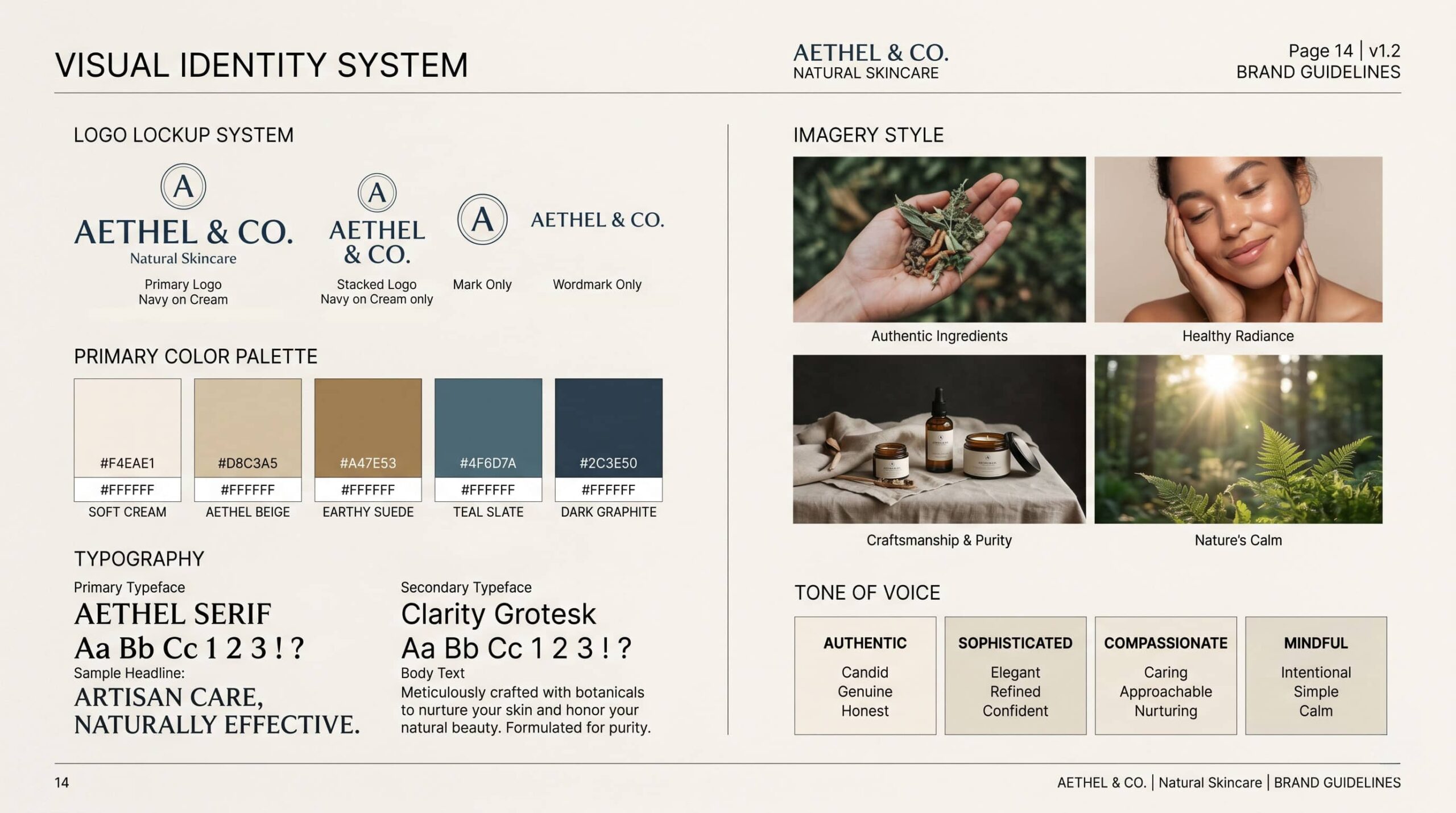
What Brand Identity Includes
- Logo system (as above)
- Color palette with exact hex, RGB, CMYK, and Pantone values
- Typography system — primary and secondary typefaces, hierarchy rules
- Imagery and photography direction
- Tone of voice — how the brand sounds in writing
- Brand story, mission, and values
- Design patterns, iconography, and graphic elements
- Application guidelines across digital and print
Every one of those elements works together. Your color palette reinforces your personality. Your typography sets the tone before a single word is read. Your imagery direction ensures that every photo or illustration your brand uses feels like it came from the same place. Tone of voice ensures your brand sounds like itself whether it’s writing a homepage headline or responding to a comment on Instagram.
Remove any one of those elements and you have gaps. Gaps create inconsistency. Inconsistency erodes trust. And trust, ultimately, is what a brand is built on.
Your Brand vs. Your Brand Identity: Understanding the Full Picture
There’s a third term worth clarifying here, because it’s the one most people mean when they say “brand” — even if they don’t realize it.
Your brand is not something you design. It’s the perception people have of your business when you’re not in the room. Constant Creates puts it clearly: it’s what someone thinks when they hear your name, how they feel after working with you, what they tell their friends about you. It’s the sum of every interaction, every touchpoint, every experience.
You build your brand through how you answer the phone, what your website says and looks like, how you price your services, how you follow up after a project, how you handle complaints, and what people say about you in reviews. None of that is a logo or color palette — but all of it shapes what your brand is.
Think of it this way:
- Your brand is the reputation — what people think and feel about you. You influence it but don’t own it.
- Your brand identity is the visual and verbal toolkit you use to shape that reputation deliberately.
- Your logo is one element within that toolkit — an important one, but only one.
Brand strategy comes first. Brand identity comes second. The logo comes after that. This is the order most small businesses get backwards.
Why Small Businesses Get the Logo vs. Brand Identity Order Wrong
It’s an understandable mistake. A logo is tangible. It’s something you can see, share, and put on things immediately. Brand strategy — defining who you are, who you serve, how you’re different, and what you stand for — takes thought and time and often feels abstract. So most small businesses skip straight to the visual and hope the strategy figures itself out.
It doesn’t. Natsumi Nishizumi, a brand identity designer, describes conversations she regularly has with potential clients: at first, many say they only need a logo. After talking, they usually realize they actually need more. A logo without a brand identity system behind it is a signature without a name — it might look good, but it doesn’t communicate anything on its own.
The practical consequence: a business with a logo but no brand identity struggles to look consistent across platforms. The website feels different from the social media. The email template doesn’t match the business card. The marketing materials look like they came from three different companies. Each inconsistency is a small erosion of trust. Over time, those erosions compound.
“Brand strategy comes first. Brand identity comes second. This is where most small businesses get it backward.”
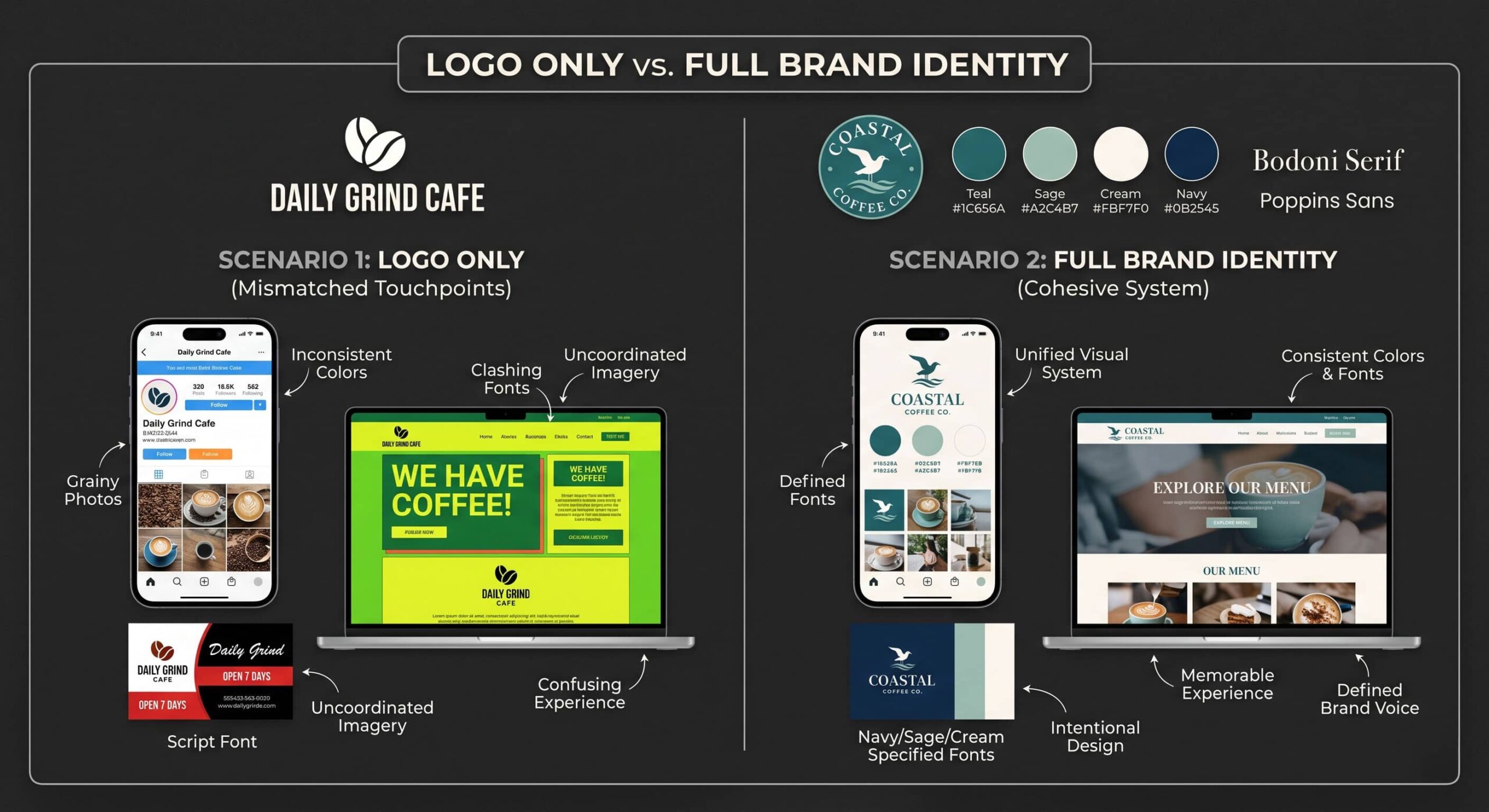
Logo vs. Brand Identity: What Your Small Business Actually Needs
The answer depends on where you are in your business lifecycle — but it’s worth being honest about where that actually is.
When a Logo-Only Brand Identity Approach Makes Sense
If you’re launching tomorrow, testing a concept, or operating in a context where a complete visual system isn’t yet practical, a well-designed logo is a legitimate starting point. Get the mark right, keep it flexible, and plan to build the system around it as the business grows.
When Your Business Needs a Full Brand Identity System
If you’re past the early launch phase and trying to grow — adding marketing channels, expanding a product line, building a team, or trying to attract a higher-value client — a logo alone will hold you back. The moment consistency starts to matter is the moment you need a brand identity system.
Signs you’ve outgrown your logo-only approach:
- Your touchpoints — website, social, print, packaging — don’t feel like they come from the same place
- You’re briefing designers repeatedly and getting inconsistent results because there’s no system to reference
- Customers remember your product but not your brand
- You’re growing but your brand doesn’t feel like it’s growing with you
Any of those sound familiar? That’s not a logo problem. That’s a brand identity problem — and the solution isn’t a new logo.
See a Real Brand Identity System in Action





Ready to Build a Real Brand Identity?