Modular Design Meets 3D Printing: Build Products That Last Longer and Cost Less to Maintain
Brands are redesigning products with swappable 3D-printed parts instead of full replacements. What modular durability means for your product and bottom line.
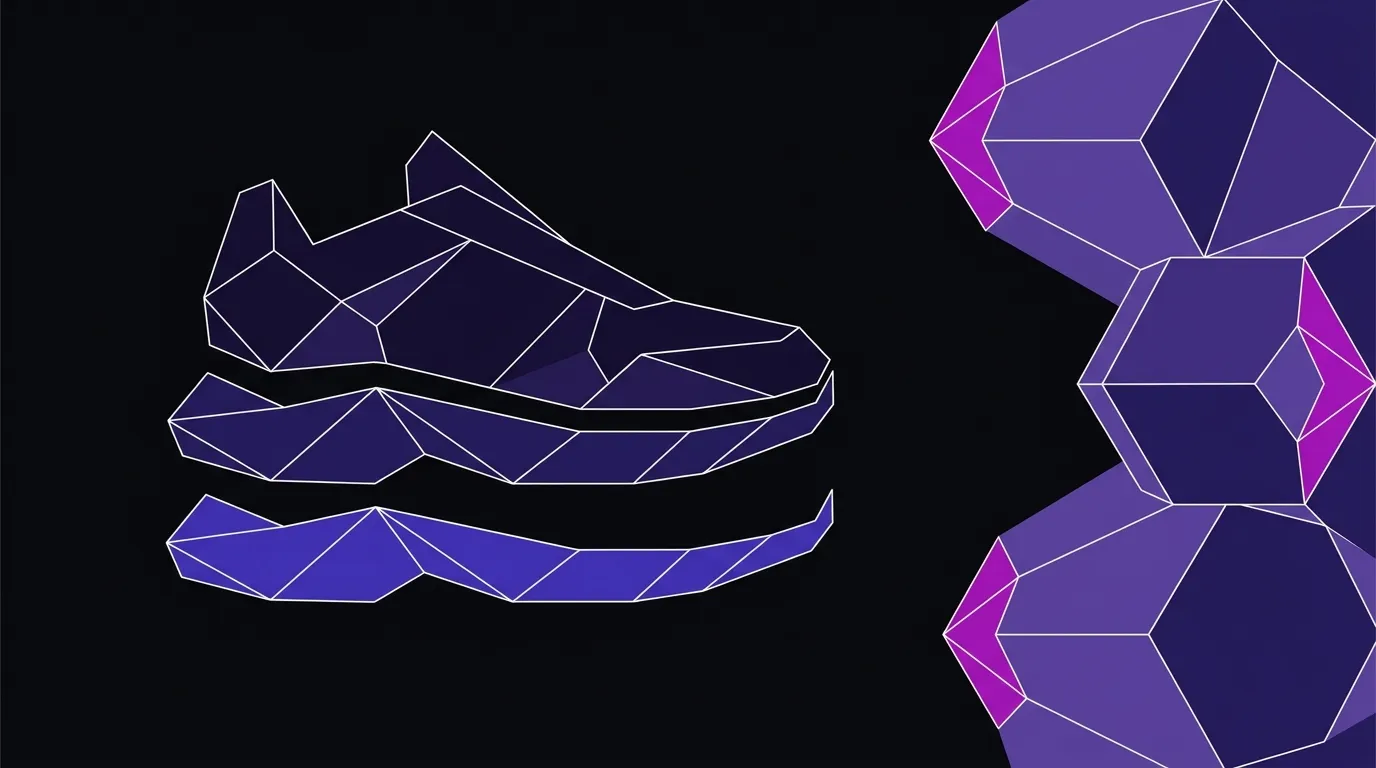
The most expensive thing a customer can do with your product is throw it away. Not because of the lost sale — though that matters — but because the moment they toss it, you’ve lost the relationship. Modular design, built around 3D-printed components that can be individually swapped or refreshed, changes that calculus. It’s not a new idea in engineering, but desktop fabrication has finally made it practical at a scale that product brands can actually act on.
Two recent examples make the case concretely, and together they point toward a pattern worth paying attention to.
A Pointe Shoe That Outlasts Five of Its Predecessors
Traditional pointe shoes are a durability disaster by design. A professional dancer burns through a pair every 10 to 20 hours of use, discarding the entire shoe once any single component — the shank, the toe box, the sole — gives out. As 3D Printing Industry reports, German dancewear company Actble, founded by former ballet dancer Sophia Lindner, tackled this by redesigning the shoe into three independently replaceable components: a 3D-printed inner sole, a compression-fit knitted skin, and laces. The inner sole is printed in TPU with engineered incisions that allow the foot to flex naturally, while the segments lock together for support when the dancer rises onto pointe. When the sole wears out, a dancer swaps just that piece — not the whole shoe. Lindner says the result is a lifespan up to five times longer than a conventional pointe shoe.
That’s not a marginal improvement. It’s a product category redefined.
The fabrication partner, Barcelona-based Something Added, produces the soles using HP’s Multi Jet Fusion technology — an industrial powder-bed process. The principle, however, scales down to FDM: design a part with a clear failure mode, make that part independently replaceable, and print it from a material matched to the mechanical demand. The geometry does the work.
Lattice Structures in Seating: Durability Through Engineered Voids
The Alpine and Lacoste collaboration reported by 3Dnatives takes a different angle on the same problem. Rather than splitting a product into swappable modules, they used 3D-printed lattice structures inside seat components — engineered voids that reduce material while maintaining structural performance. Lattice geometry distributes load across a surface rather than concentrating it at stress points, which is exactly where conventional seats crack or compress over time.
The implication for product brands is the same: the internal architecture of a part matters as much as its material. FDM printers can produce lattice infill patterns natively in slicing software — Cura and PrusaSlicer both offer gyroid, honeycomb, and cubic infill options that approximate this principle at the desktop level. You don’t need an industrial machine to start experimenting with the geometry.
Replacement Parts Are a Revenue Stream, Not an Afterthought
Here’s what the Actble story actually demonstrates, and what most coverage of it misses: a modular product doesn’t just last longer. It creates a recurring relationship with the customer. A dancer who buys into Actble’s system needs replacement soles, not replacement shoes. The brand stays in the customer’s life — and wallet — at a lower per-transaction price point but a higher lifetime value.
For product businesses, that’s a structural shift in the revenue model. A product designed to be fully replaced on failure generates one transaction. A product designed with a swappable wear component generates the initial sale plus a parts relationship. The parts margin is often better than the product margin, and the customer acquisition cost is zero — they’re already yours.
This is why we think the most interesting question for any physical product brand right now isn’t “how do we make this cheaper to manufacture?” It’s “what is the first thing that fails, and can we make that thing independently replaceable?”
What Makes a Component a Good Candidate for 3D-Printed Modularity
Not every part benefits from this treatment. The components worth isolating share a few traits:
They fail before the rest of the product. A sole wears out before a knitted upper. A grip wears out before a tool body. A gasket fails before a housing. These are your candidates.
They’re geometrically complex or custom-fit. Standard fasteners and off-the-shelf hardware don’t need to be printed. But a component that needs to conform to a specific shape, distribute load in a particular way, or accommodate variation across users — that’s where printed geometry earns its cost.
They’re small enough to print economically. A full chair seat is a large print with long cycle times. An armrest pad, a lumbar insert, a foot glide — these are practical FDM targets. Size discipline is part of the design strategy.
They carry a sustainability story. Reducing waste is genuinely good, and customers increasingly treat it as a purchase criterion. A product that generates less landfill because it’s designed for component-level repair is a product with a marketing angle built into its engineering.
The Design Work Comes First
None of this works without intentional design upstream. A product that wasn’t conceived as modular can’t be retrofitted into one without a real redesign effort. The joint between replaceable and permanent components needs to be engineered — compression fits, snap geometry, alignment features — not assumed. TPU and other flexible filaments behave differently under load than rigid materials, and that affects wall thickness, infill density, and the orientation the part is printed in.
This is where working with people who actually run printers matters. When we’re involved in 3D printing and prototyping work, the conversation about material and geometry happens before the first layer is laid down — because a part designed without knowing how it’ll be printed often fails in ways that have nothing to do with the concept and everything to do with the process.
Start With One Part, Not a Full Redesign
If you make a physical product and you’re reading this thinking it sounds complicated, start smaller than you think you need to. Identify one component that fails first. Design a replacement version that can be swapped without tools or with minimal tools. Print a prototype in the material that matches the mechanical demand. Test it against the original. The question you’re answering isn’t “can we redesign our entire product line?” — it’s “can we make this one part outlast the thing it’s attached to?”
That’s a manageable experiment. And if it works, you have the foundation of a durability story, a parts program, and a reason for customers to stay in your ecosystem instead of moving on to a competitor when something wears out.
The brands doing this well aren’t treating 3D printing as a manufacturing shortcut. They’re treating it as a design tool — one that makes modularity practical at scales that injection molding never could.
Ready to Prototype a Modular Component?
We run FDM printers and work through material and geometry decisions before the first layer prints. If you have a product with a part that fails too soon, let's talk about what a replaceable version could look like.