Immersive Web Experiences Are No Longer Niche—They're Expected
Real-time 3D terrain, scroll-driven narratives, and WebGL scenes are shipping on standard stacks. The brand that doesn't try is already saying something.
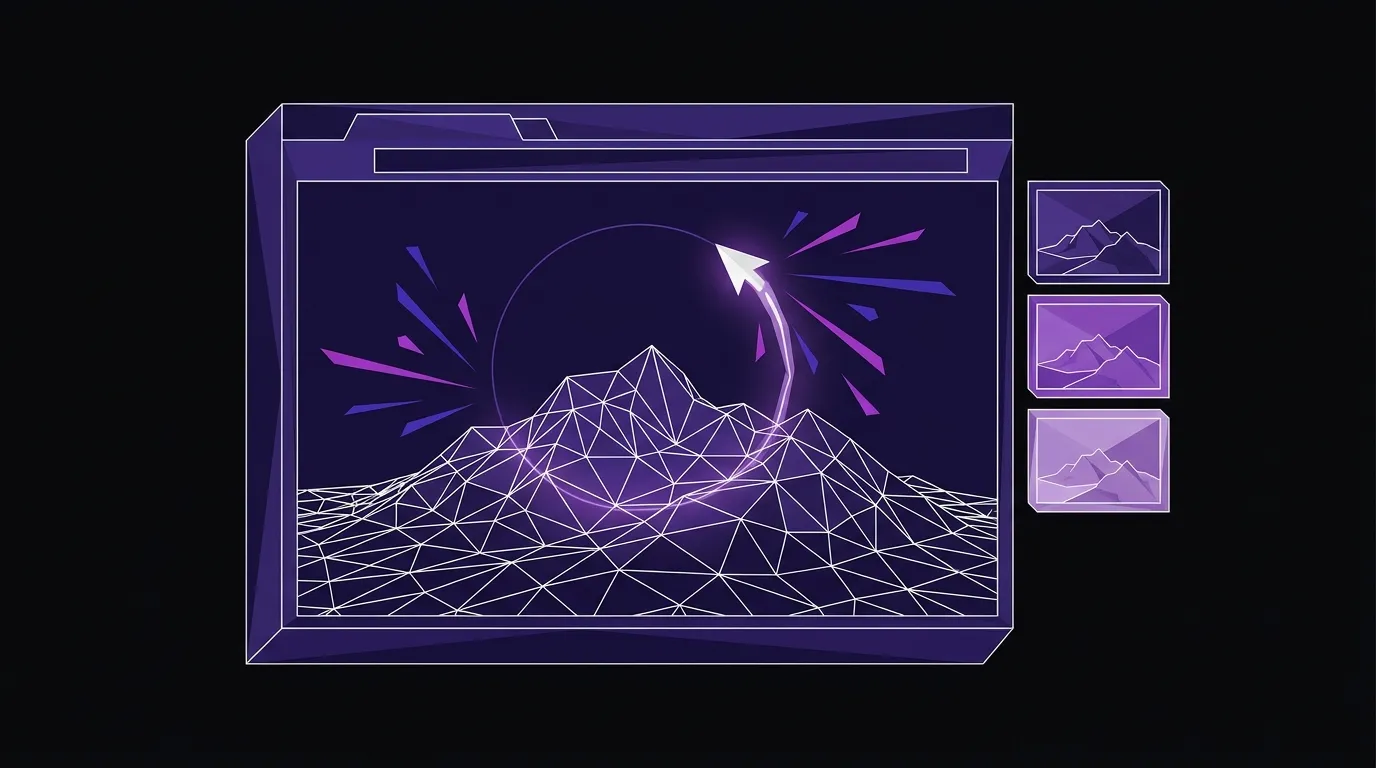
Three studios published detailed technical breakdowns of immersive web projects in the same week in July 2026. That simultaneity isn’t a coincidence—it’s a tipping point. Real-time 3D terrain, scroll-driven narratives with interactive gates, and WebGL scenes running at 60fps on a budget Android phone are all shipping right now on standard web stacks. A static site next to a competitor’s immersive experience doesn’t just look dated—it communicates something specific about how your brand thinks about its customers’ attention.
The question for your brand isn’t whether this is technically possible. It is. The question is which approach fits, and what the brand conversation has to settle before the technical one can start.
The open-source stack closed the cost gap; the decision gap is what remains
A few years ago, putting a real-time 3D scene on a website meant a custom engine, a specialized team, and a budget most businesses couldn’t justify. That story is outdated, and the evidence is specific.
As Codrops documents in their Ridgeline breakdown, a solo developer built a cinematic site featuring real elevation data from actual alpine treks—rendered live in Three.js, scroll-synchronized with photography and ambient sound, and fully integrated into Webflow—in about a week. The stack is entirely open-source: Three.js, React Three Fiber, GSAP, and Blender for asset prep. Any studio already working in React and Webflow can pick up these tools without a new hire.
The integration approach is worth understanding, because it solves a problem most brand owners worry about immediately: who maintains the content? The 3D bundle mounts into attribute-tagged host elements that the Webflow designer places. Webflow controls layout; JavaScript controls behavior. The editorial team keeps full control over content without ever touching the 3D layer. That architectural split—CMS owns structure, code owns rendering—represents one pole of a decision every immersive web project has to make.
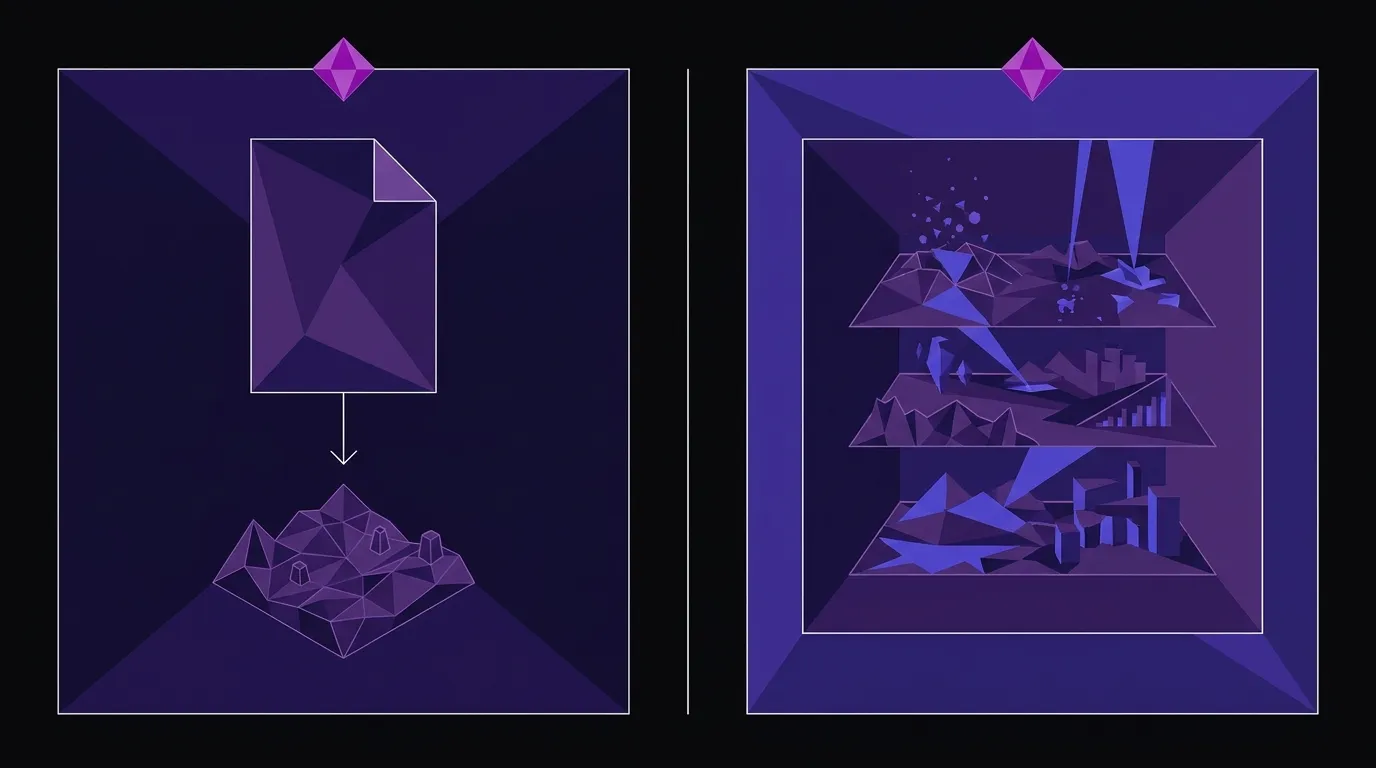
The Cerebrium project, also documented by Codrops, sits at the opposite pole: a single WebGL canvas managing multiple environments, each with its own materials, particles, lighting, and post-processing pipeline, with page transitions that carry full scene state across routes without a reload. Where Ridgeline trades 3D control for editorial flexibility, Cerebrium trades editorial flexibility for total rendering ownership. Studios are making that call deliberately on client work now, not just in experimental builds.
Immersive doesn’t mean frivolous—the Cerebrium case makes that plain
The objection we hear most often goes something like: “That’s beautiful, but our customers care about what we sell, not how the site moves.” It’s a reasonable instinct, and it’s wrong.
The Cerebrium project is the clearest counter-argument. The client sells serverless AI infrastructure—a product category that sells on benchmarks and uptime, not emotion. The studio’s stated goal was to make people feel how the product works: fast, precise, modular. As the Codrops writeup describes, “design wasn’t just supporting the story—it was the story.” Every interaction was designed to reflect the product’s actual qualities. The 3D experience wasn’t decoration; it was the product explanation, doing work that no diagram or copy block could replicate.
The ZERO project, detailed in another Codrops breakdown, pushes this further. The site opens locked—no enter button, just a prompt to draw a zero with your cursor. When the circle closes, frost spreads from the stroke and reveals the experience. That single interaction communicates the brand’s entire thesis—challenging the traditional degree path—before a word of copy appears. The team built the proof-of-concept in 48 hours and won the project with it. They didn’t win because they had the most impressive shader. They won because they answered the brand question first: what do we want someone to feel in the first ten seconds?
These experiences work because they translate a brand’s core idea into something a visitor experiences rather than reads. That’s a persuasion function, not an aesthetic one.
Two models, one question to answer before you brief a developer
The differentiator is not the stack—it’s answering one question before you open a design file: what do we want someone to feel in the first ten seconds? That answer determines which of two models fits your project.
If your team updates the site more than once a month and no developer is on retainer, you’re in the editorial-first camp. If you’re launching a campaign with a fixed end date and a specific message arc, you’re not.
Editorial-first (the Ridgeline model): The 3D layer is decoupled from content. A CMS controls structure; the 3D bundle mounts into slots. The right choice when the site needs frequent content updates and the team maintaining it isn’t a developer. The trade-off is that the 3D layer has less control over what surrounds it.
Narrative-first (the ZERO model): A single value drives every animation, asset load, and shader timing across a fixed arc. As the ZERO team describes it, the experience is split into self-contained segments, each with its own lifecycle—enter, scrub, update, teardown—so the whole experience is always initialized as if the user scrolled through it naturally. Use this for a campaign or launch experience where you want precise control over exactly what a visitor encounters at every moment.
These are the conversations we run at the start of every immersive web engagement in our web design and development practice: where does motion serve the brand, where does it slow the user down, and what’s the right interactivity level for the actual device mix your audience uses. Those aren’t purely technical questions. They’re brand questions that happen to require technical answers.
Performance is no longer the excuse—but it still requires real judgment
The honest version of this conversation has to include performance. Heavy 3D experiences have historically punished mobile users and anyone on a slower connection, and a site that loads in 20 seconds on a phone is worse than no 3D at all.
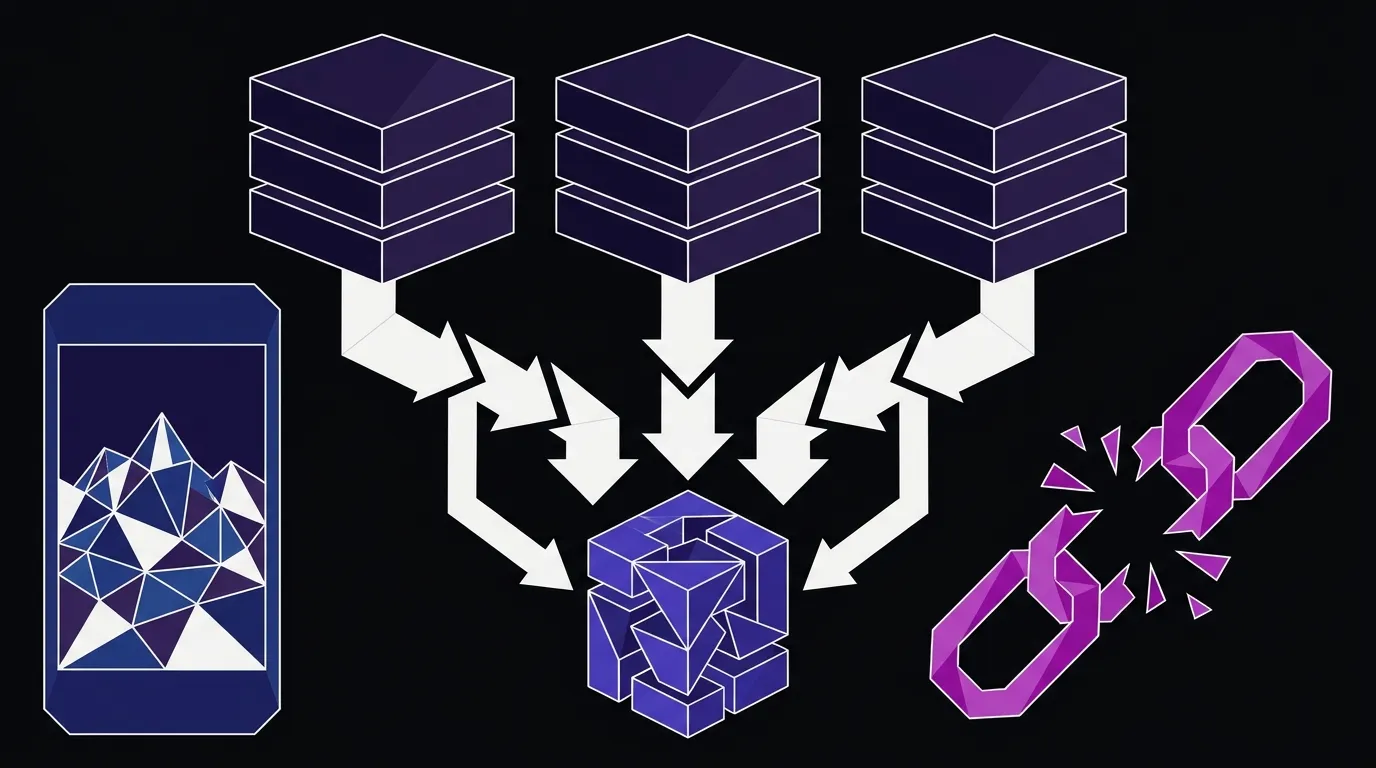
The ZERO team addressed this directly. Their source assets started at over a gigabyte of Blender scenes with 8K textures. The shipped site came in under 10MB and runs at 60fps on a budget Android phone, per the Codrops writeup. The techniques that got them there—Draco-compressed geometry, KTX2/Basis texture transcoding, self-hosted decoders rather than CDN-dependent ones—are documented and repeatable. The team learned the CDN lesson the hard way: when a slowdown on external hosts hit, every compressed asset failed to decode even though the assets themselves were local.
The Cerebrium team hit a different wall. WebGPU’s shader compilation ran close to 20 seconds on their reference machine at the time of shipping, so they migrated back to WebGL. Later Three.js versions improved shader compilation speed by roughly three times through better node-type caching, as their writeup documents—but those improvements didn’t exist when they had to ship.
Both failures share a root cause: a dependency on infrastructure outside the team’s control—whether a CDN or a browser API still maturing. The lesson is the same: own your pipeline or own the risk. Both teams arrived at production-ready results through different routes, and both required someone in the room who could recognize when the elegant solution needed to give way to the reliable one. That judgment is not in the tools.
The brand that doesn’t try is already saying something
The studios publishing these breakdowns aren’t keeping secrets. The techniques are documented, the tools are open-source, and the talent to execute is findable. Every brand has roughly equal access to the stack.
What separates the brands that will own the perception gap from those that won’t is that prior question: what do we want someone to feel in the first ten seconds on this site? The Cerebrium team answered it before they wrote a line of shader code. The ZERO team answered it before they had a client. The Ridgeline developer answered it with a single governing rule before choosing an architecture.
The brands committing to immersive web now aren’t winning because they moved fast. They’re winning because they started with the brand question, not the technical one—and because the gap between their site and a static competitor’s tells a story before any copy loads.
Ready to build something immersive?
We design and build web experiences that translate your brand into something visitors feel, not just read. Let's figure out which model fits your project.